
With numerous firewall models in Palo Alto’s lineup, you’ll find yourself making a lot of technical comparisons. Those looking for an upgrade from the PA-445 have quite a few options. If you’re thinking several steps ahead, then it wouldn’t be uncommon to consider the differences between Palo Alto PA-445 vs Palo Alto PA-460.
Having scalability in mind, it doesn’t hurt to jump a few steps ahead when it comes to different next-gen firewalls (NGFWs). Looking at Palo Alto security, they have several hardware options that go beyond the limitations of the 445.
Keeping your hardware firewall solutions within the same manufacturer makes a transition a lot easier than you might expect. This article highlights the key differences in the hardware specs of these firewalls so you know what you’re getting into.
Key Differences in Palo Alto Security
Taking the leap into account, you’re skipping a couple of firewall models, going from the 445 to the 460. It might seem substantial, but it’s the perfect amount of wiggle room for scaling businesses that are looking for long-term support for their network security.
It’s important to note that both of these Palo Alto NGFWs are aimed at smaller but growing organizations. While you don’t have to worry about an end-of-life (EOL) date for either of these firewalls at this time, staying one step ahead is crucial here.
Not only for scalability but also to be ahead of the curve of potential security challenges down the line. Part of this process is examining the specs so you know how to move forward.
What is the Palo Alto PA-445?
Regardless of how it differs, the PA-445 comes with many of the same impressive features found in surrounding models. A few examples of this include predictive performance and zero-touch provisioning (ZTP), to name a few.
Focusing on the most important specs, here’s where you’ll want to start your comparison to the PA-460:
- Firewall Throughput: 2.7 Gbps
- Threat Prevention Throughput: 1.25 Gbps
- IPsec VPN Throughput: 1.1 Gbps
- Max Concurrent Sessions: 200,000
- New Sessions per Second: 34,000
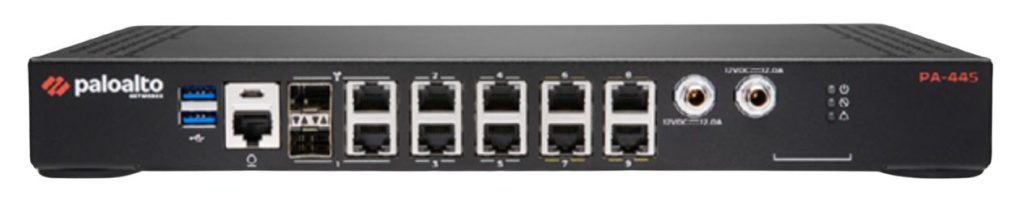
You can assume it gets a lot more technical than this, but these details provide the general overview you need. Even those who aren’t familiar with specific terminology can see various limitations in the numbers alone. If you know anything about firewall hardware, it’s safe to say the Palo Alto PA-460 is a bit stronger in several categories.
What is the Palo Alto PA-460?
Many small companies that are looking to upgrade from their current firewall hardware would do well to consider the PA-460. Once again, you get a lot of the same features included with the PA-445, just with larger thresholds in most specs.
Here’s a quick look at how the Palo Alto PA-460 compares:
- Firewall Throughput: 4.6 Gbps
- Threat Prevention Throughput: 3 Gbps
- IPsec VPN Throughput: 2.3 Gbps
- Max Concurrent Sessions: 400,000
- New Sessions per Second: 67,000

You don’t have to be an expert on firewall tech to see the benefits in upgrading to the PA-460. Shifting firewall generations isn’t a new concept to this industry, which means you’ll eventually upgrade from the 460 as well. It’s all about meeting current network security demands while keeping your ear to the ground on what’s to come.
Palo Alto PA-445 vs Palo Alto PA-460 in the Datasheet
If you really want to know what sets these Palo Alto firewalls apart, it comes down to itemizing the most important specifications first. You want to look for the numbers that’ll affect the scope of your network security the most. The table below offers a clear look into the differences between Palo Alto PA-445 vs Palo Alto PA-460.
| Specifications | Palo Alto PA-445 | Palo Alto PA-460 |
|---|---|---|
| Firewall Throughput (Gbps) | 2.7 | 4.6 |
| Threat Prevention Throughput (Gbps) | 1.25 | 3 |
| IPsec VPN Throughput (Gbps) | 1.1 | 2.3 |
| Max Concurrent Sessions | 200,000 | 400,000 |
| New Sessions per Second | 34,000 | 67,000 |
| Virtual Systems (Base/Max) | 1/2 | 1/5 |
| I/O | 1 x 1G SFP/RJ45 4 x 1G RJ45 4 x 1G RJ45/PoE | 8 x 1G RJ45 |
| Management I/O | 1 x 1G SFP/RJ45 combo management port 1 x RJ45 console port 2 x USB port 1 x Micro USB console port | 1 x 10/100/1000 out-of-band management port 1 x RJ45 console port 2 x USB port 1 x Micro USB console port |
| Storage Capacity | 128 GB eMMC | 128 GB eMMC |
| Power Supply (Avg/Max) | 140 W / 146 W | 32.6 W / 41.3 W |
Choosing the right Palo Alto firewall takes a lot into account and shouldn’t be a rushed decision by any means. This includes reviewing the surface-level specs, feature highlights, potential EOL dates, and the Palo Alto firewall price as well. At the end of the day, you want firewall solutions that’ll serve your network security for years to come.
A Final Word
Comparing the likes of Palo Alto PA-445 vs Palo Alto PA-460 can get confusing pretty quickly if you don’t know where to look. Whether you’re upgrading from the 445 or another small business firewall, the PA-460 isn’t a bad way to go.
While you have others you can always choose from, this makes for an easy segue for existing Palo Alto users. If you’re still on the fence about it, come have a chat with us so we can help get your decision-making on the right track.