Fortinet offers more than one enterprise-class access point. Regarding the FortiAP-221E vs 231K, these Fortinet access points are designed for both medium and high-density environments.
Whereas the 221E is more ideal for small offices, the 231K is built for higher-capacity environments. There are a lot of technicalities involved with both wireless access points (WAPs), and it’s important to understand the differences when it comes down to making a choice. This article dives into a comparison of FortiAP-221E vs 231K so you end up making the right decision.
What to Expect from Fortinet WAP’s
Integrating with the Fortinet Security Fabric, wireless AP’s from this network security provider are more than reliable. Companies get the benefit of centralized management as well as network-wide policy enforcement.
It isn’t just about providing reliable wireless access, but aligning with your security protocols too. They do well to support growing offices, in addition to an increasing number of connected devices. At the same time, it’s important to discern where they differ for the sake of your decision-making process.
What is the FortiAP-221E?
Created to be a medium-density enterprise-class access point, the 221E supports 802.11ac Wave 2 Wi-Fi standards. It comes with two radios, as well as two spatial streams. It’s built to be ideal for medium-density environments and provides reliable performance in more ways than one.
Here’s a quick look at some of the WAP’s specifications:
- Number of Radios: 2 + 1 BLE
- Number of Antennas: 4 Internal + 1 Internal BLE
- Max Data Rate: Up to 867 Mbps
- Power over Ethernet (PoE): IEEE 802.3af
- Per Radio Client Capacity: Up to 512
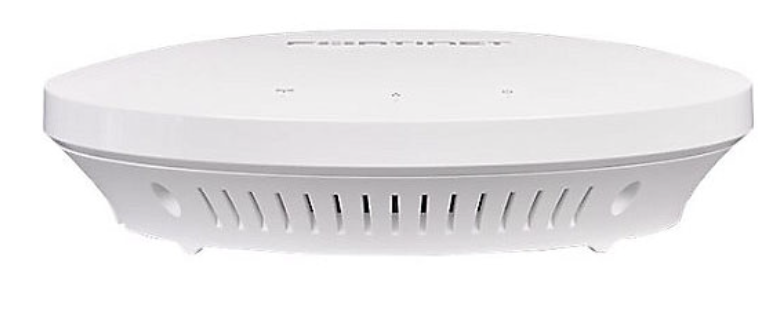
To newcomers, this won’t mean much until you size it up against the other wireless AP models. Nevertheless, it’s a good start for businesses that are working with a small office space.
What is the FortiAP-231K?
A notable, enterprise-class indoor Wi-Fi 7 access point, the 231K features three radios and two spatial streams of its own. It provides 24/7 background scanning across all bands while easily maintaining active network access.
Here’s a quick comparison with a few surface-level specs:
- Number of Radios: 3 Wi-Fi + 1 BLE
- Max Data Rate: Up to 5.765 Gbps
- Simultaneous SSIDs: Up to 24
- Power over Ethernet (PoE): 1 802.3at PoE default
- Per Radio Client Capacity: Up to 512
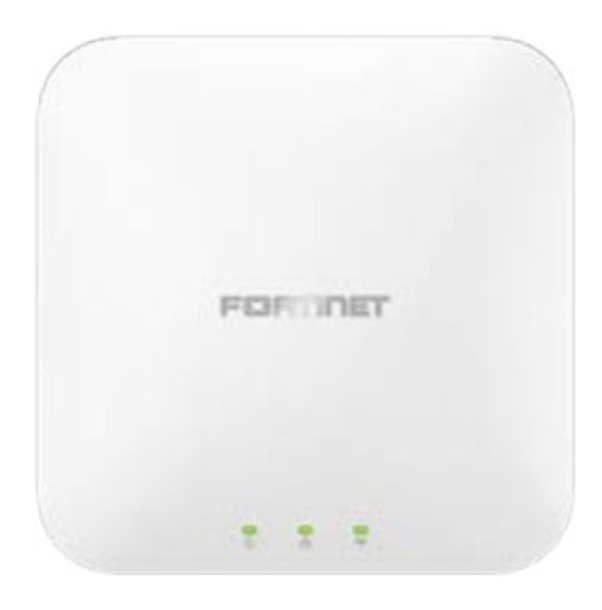
Keep in mind, just because the 231K is built to be a bit stronger, that doesn’t automatically mean it’s better for every business. The details always matter, and it’s the technical specs that’ll help you discern which side to lean toward.
A Direct FortiAP-221E vs 231K Guide
Instead of going through the full length of the datasheets, it doesn’t hurt to focus on some of the most important details. In the table below, you’ll find several comparable specs you can reference to guide you closer toward the right choice.
| Specifications | FortiAP-221E | FortiAP-231K |
|---|---|---|
| Number of Radios | 2 + 1 BLE | 3 Wi-Fi + 1 BLE |
| Number of Antennas | 4 Internal + 1 Internal BLE | 2 Dual-band Wi-Fi 2 6GHz band Wi-Fi 1 BLE/ZigBee antenna 1 GPS antenna |
| Max Data Rate | Up to 867 Mbps | Up to 5.765 Gbps |
| Simultaneous SSIDs | Up to 8 per client serving radio | Up to 24 |
| PoE | IEEE 802.3af | 1 802.3at PoE default |
| Per Radio Client Capacity | 512 | 512 |
| Radio 1 Capabilities | 2.4 GHz b/g/n (2x2:2 stream) 20/40 MHz (256 QAM) | Frequency band: 2.4GHz Channel width: 20/40MHz Modulation: BPSK, QPSK, 16/64/256/1024 QAM MIMO Chains: 2x2 Service |
| Radio 2 Capabilities | 5 GHz a/n/ac (2x2:2 stream) 20/40/80 MHz (256 QAM) | Frequency band: 5.0GHz UNII-1 to UNII-4 Channel width: 20/40/80/160MHz Modulation: BPSK, QPSK, 16/64/256/1024/4096 QAM MIMO Chains: 2x2 Service |
| Radio 3 Capabilities | N/A | Frequency band: 6.0GHz UNII-5 to UNII-8 Channel width: 20/40/80/160/320MHz Modulation: BPSK, QPSK, 16/64/256/1024/4096 QAM MIMO Chains: 2x2 Service |
| Interfaces | 1 x 10/100/1000 Base-T RJ45 | 1 100M/1000M/2.5G/5.0G Multigigabit Ethernet (RJ45) 1 RS‑232 RJ45 Serial Port |
It can all get pretty technical, but the guide above helps you avoid digging through the entire datasheet. Of course, there’s also the option of working with industry and hardware experts before making a final decision.
Let’s Wrap Up
If you’re dealing with a medium-density environment, then the FortiAP-221E is likely to be the better choice. On the other hand, for those who need support for higher data rates and overall capacity, the 231K is the much more ideal.
Regardless of the model, the wireless AP reviews are positive on both sides. It’s always more about which specs align most with your operational needs. Don’t hesitate to get in touch with us at Firewalls.com for a thorough opinion filled with expertise to make sure you end up making the best possible choice.
FAQ
What Types of Environments are the FortiAP-221E and 231K Suited For?
The 221E is best for medium-density spaces like offices or classrooms, while the 231K is designed for high-density, high-capacity enterprise environments.
What Wireless Standards Do These FortiAP Models Support?
The 221E supports 802.11ac Wave 2, and the 231K supports the latest Wi-Fi 7 standard for faster speeds and improved performance.
Do Both Access Points Support Power over Ethernet (PoE)?
Yes, the 221E uses IEEE 802.3af PoE, while the 231K supports 802.3at PoE for higher power delivery.
Can the FortiAP-231K be Used for Location-Based Services?
Yes, the 231K includes integrated BLE/ZigBee radios that can be used for beacons and location tracking apps.
How Many Clients Can Each Radio Support on These APs?
Both the 221E and 231K can support up to 512 clients per radio, promising stable connectivity for multiple devices simultaneously.