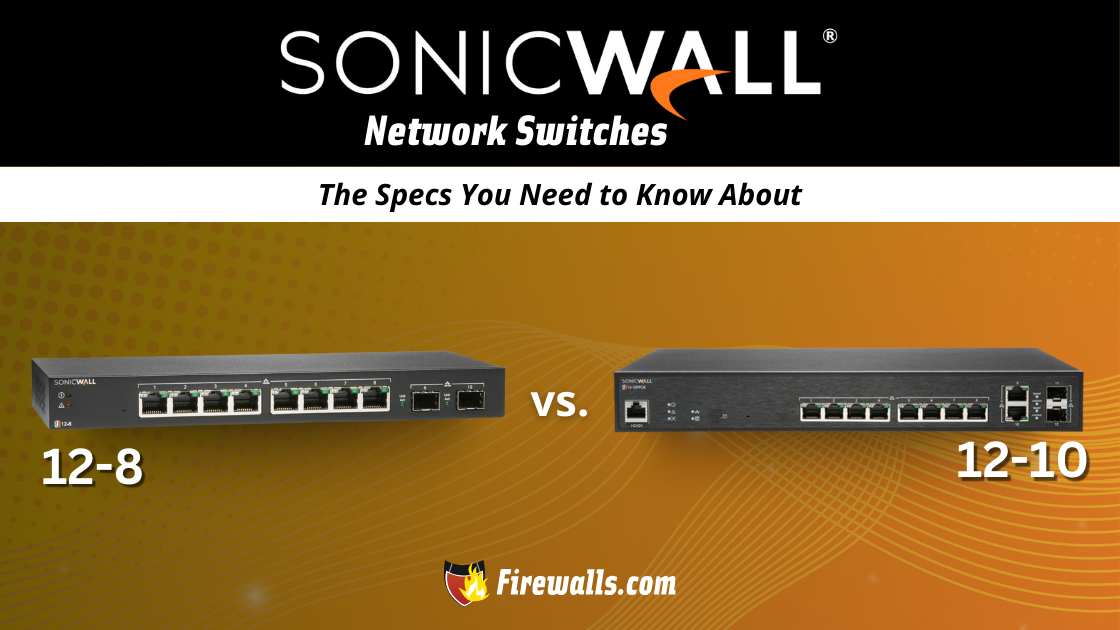
If you’re looking for high-speed network switching, SonicWall has more than enough options to choose from. Whether you’re dealing with a smaller network or branch offices, features like SNMP monitoring, zero-touch deployment, and Layer 2 switching have you covered. More specifically, comparing the SonicWall switch 12-8 vs 12-10 is a good start for businesses looking for a bit of variety.
Differences aside, SonicWall switches are known for compact, energy-efficient design, segmentation, static routing, and overall efficient network management. This article compares the SonicWall switch 12-8 vs 12-10 to highlight the differences and point you in the right direction.
Choosing the Right SonicWall Switch
Making the right choice between various SonicWall switch options depends on several factors. It’s important to have a solid grasp of your network and performance demands, as well as the length of your security requirements.
From the jump, the 12-8 is much more ideal for smaller networks. On the other side of that, the 12-10 models are known for their additional ports and capacity for more connected devices. However, both SonicWall devices seamlessly integrate with the manufacturer’s firewalls and Wireless Network Manager for streamlined management. Nevertheless, when it comes to making a decision, the fine print is what always matters here.
What is the SonicWall Switch 12-8?
A multi-Gigabit switch designed for small businesses and distributed enterprise networks, you’re getting reliable Layer 2 switching and end-to-end network management. There’s also a PoE model available for Power over Ethernet support.
For the standard 12-8 model, this is what the specs look like on the surface:
- Total Interfaces: 10
- Switching (Gbps): 20
- PoE Standard: N/A
- Number of Gigabit Ethernet Ports: 8
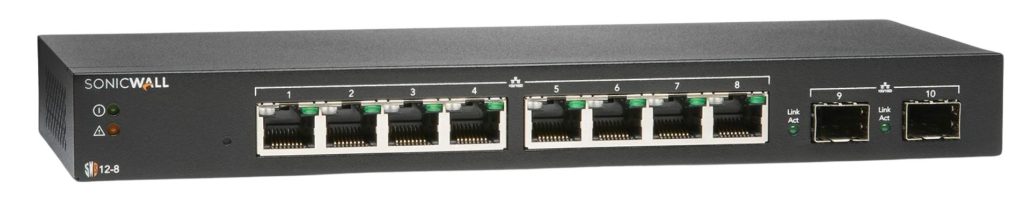
Overall, the 12-8 is compact but versatile, and does well to balance performance, security, and manageability for small operations. While the 12-8 and 12-10 share quite a few similarities, it isn’t hard to see where they differ the most.
What is the SonicWall Switch 12-10?
More specifically labeled as the 12-10FPOE, this model is a network switch PoE option that’s also multi-Gigabit and created for a similar target market. You’ll find that it comes with Layer 2 switching as well, coupled with higher port density and the benefit of full Power over Ethernet.
Here’s a quick look at some of the comparable specs:
- Total Interfaces: 12
- Switching (Gbps): 24
- PoE Standard: 802.3af/at
- Number of Gigabit Ethernet Ports: 10
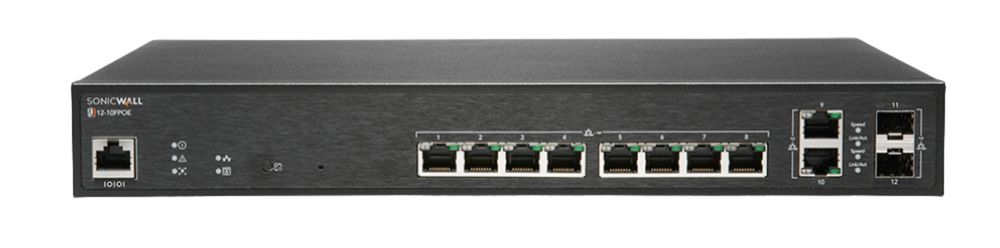
A little bit more powerful than the 12-8, the 12-10 is a networking Ethernet switch ideal for growing businesses looking for a scalable solution. Of course, the bullet points listed above aren’t the end-all, be-all of what matters between these two models.
SonicWall Switch 12-8 vs 12-10 Overall Comparison
Both 12-8 and 12-10 switches come with similar target markets in mind, but that doesn’t mean they’re equals on every level. Review the table below for a streamlined comparison of SonicWall Switch 12-8 vs 12-10 to know which path is best for you.
| Specifications | 12-8 | 12-10 |
|---|---|---|
| Total Interfaces | 10 | 12 |
| Switching (Gbps) | 20 | 24 |
| PoE Standard | N/A | 802.3af/at |
| Number of Gigabit Ethernet Ports | 8 | 10 |
| Power Supply | 24W Power Adapter | 180W Fixed |
| Power Consumption | 5.7W | 152.8W |
| RJ45 Serial Console Port | 0 | 1 |
Aside from these categories, many other specifications between these two models are essentially the same. SonicWall security services can be vastly different, but seamless at the same time. If it’s one thing the manufacturer does well, it’s provide businesses with scalable options for an easy transition as they continue to grow.
Let’s Wrap Up
Whereas the 12-8 is an excellent start option for network switching, the 12-10 is a bit more advanced, featuring more ports and full PoE support. Nevertheless, both switches promise reliable Layer 2 switching, SNMP monitoring, and zero-touch deployment.
As always, choosing the right model depends on your needs for port count, PoE, and your anticipated network growth. For those still having a bit of trouble determining which is best for their network, we’re always here to help. Come have a chat with our team at Firewalls.com for more information on these SonicWall switches and how they align with your existing network.
FAQ
What is the Main Difference Between the SonicWall Switch 12-8 and 12-10?
The 12-10 promises more ports and full PoE support, whereas the 12-8 is more ideal for smaller networks overall.
Can Both Switches Integrate With SonicWall Firewalls and Wireless Network Manager?
Yes, both models seamlessly integrate for centralized network management and monitoring.
Do Both SonicWall Switches Support Layer 2 Switching?
Yes, both the 12-8 and 12-10 provide reliable Layer 2 switching, supporting an efficient flow of traffic across connected devices.
Which Switch is Better for Small Offices or Branch Locations?
The 12-8 is ideal for smaller networks or branch offices due to its compact size, lower power consumption, and unique features.
What are the Benefits of Choosing the 12-10 with PoE?
The 12-10FPOE can deliver power directly to devices like IP phones and wireless access points. This reduces the need for separate power adapters and cabling.