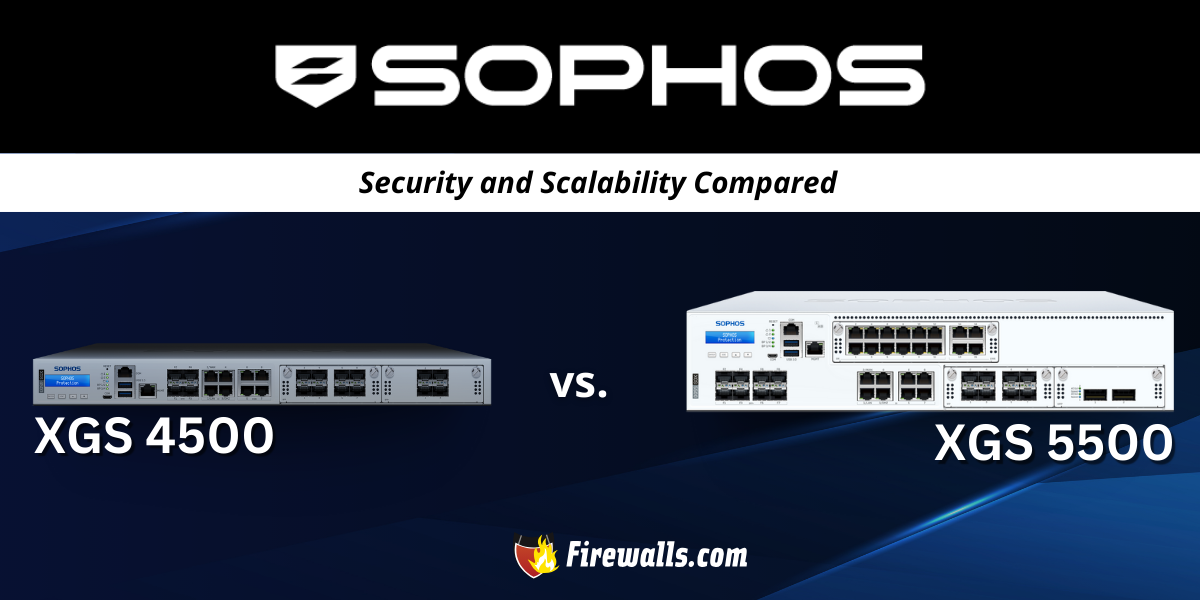
It’s important for businesses to pay attention to the firewall upgrades that land on the market for numerous reasons. Focusing on the comparison of Sophos XGS firewalls 4500 vs 5500, the datasheets come with quite a few differences in the specs.
While the XGS 4500 is geared toward mid-sized businesses, the 5500 takes it one step further, focusing on the needs of enterprise-level environments. This firewall comparison puts the specs side by side so you can discern which model is best aligned with your network security needs.
Key Takeaways:
- The XGS 4500 is ideal for mid-sized businesses, supporting up to 2,500 users
- The XGS 5500 targets enterprise networks, offering high throughput and more support for large-scale traffic
- Both firewalls include Xstream protection, providing advanced threat prevention, traffic inspection, and application control
- Choosing the right model depends on aligning firewall capabilities with current network demands
- Understanding specifications such as throughput capability and unique security features helps businesses match the right Sophos firewall to their network requirements
Security and Scalability for Growing Network Environments
Network growth will inevitably come with an increase in overall demand on the security infrastructure. Whether your business is facing higher user counts or traffic volume, these changes can lead to a shift in the security hardware you’re using.
Nevertheless, modern business environments need a firewall device that can deliver scalable visibility and network control. Within the context of Sophos XGS firewalls 4500 vs 5500, both are excellent options, but they focus on different target markets.

What is the Sophos Firewall 4500?
Undoubtedly a high-performance firewall from the Sophos lineup, the XGS 4500 is a great choice for a wide range of growing organizations. Supporting up to 2,500 users, businesses benefit from simplified management and a variety of other helpful specifications.
Here’s a quick look at what the physical firewall is capable of:
- Firewall Throughput: 80 Gbps
- IPS Throughput: 36 Gbps
- Threat Protection Throughput: 31.85 Gbps
- NGFW Throughput: 30 Gbps
- Concurrent Connections: 17,200,000

Of course, this isn’t the whole of your decision-making process, but these numbers definitely provide some general insight. Similarities aside, the XGS 5500 aims to take these specs a step further for those who need a more robust security solution.
What is the Sophos XGS 5500 Firewall?
For those who need something a bit stronger, the XGS 5500 comes with some impressive specs in comparison. This includes support for 2,500+ users and substantial throughput capability across several categories.
Take a look at how the Sophos XGS 5500 compares at a glance:
- Firewall Throughput: 100 Gbps
- IPS Throughput: 40 Gbps
- Threat Protection Throughput: 46 Gbps
- NGFW Throughput: 38 Gbps
- Concurrent Connections: 32,400,000
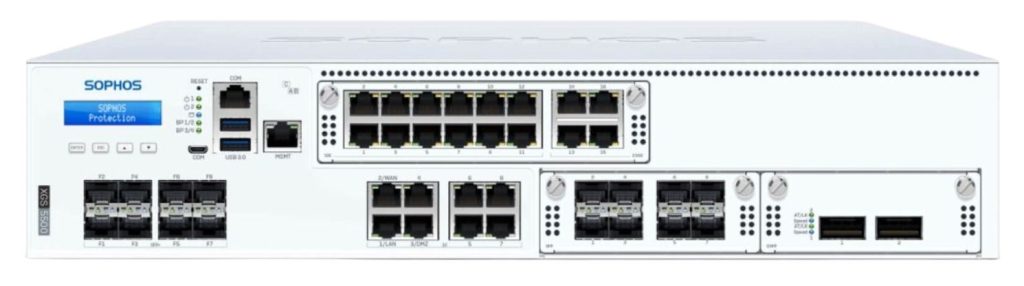
Although this information trumps the limitations of the 4500, that doesn’t mean it’s universally the best choice for every business. Regardless of capability, your decision-making should also be supported by aligning the right firewall device with your network demands.
Sophos XGS Firewalls 4500 vs 5500 Comparison
Thankfully, this firewall comparison is pretty straightforward. There’s always going to be a ton of technicalities in the datasheets. However, with the table below, you can focus on core information that’ll help guide your network security setup in the right direction.
| Specifications | XGS 4500 | XGS 5500 |
|---|---|---|
| Firewall Throughput (Gbps) | 80 | 100 |
| IPS Throughput (Gbps) | 36 | 40 |
| Threat Protection Throughput (Gbps) | 31.85 | 46 |
| NGFW Throughput (Gbps) | 30 | 38 |
| IPsec VPN Throughput (Gbps) | 75.55 | 92.5 |
| Xstream SSL/TLS Inspection (Gbps) | 10.6 | 13.5 |
| Concurrent Connections | 17,200,000 | 32,400,000 |
| New Connections per Second | 450,0000 | 468,000 |
| Storage | 2 x min. 240 GB SATA-III SSD (SW RAID-1) | 2 x min. 480 GB SATA-III SSD HW RAID built into CPU |
| Interface Details | 4 x GE copper 4 x 2.5 GE copper 4 x SFP+ 10 GE fiber 1 x RJ45 MGMT 1 x COM RJ45 1 x Micro-USB 2 x USB 3.0 | 8 x GE copper 8 x SFP+ 10 GE fiber 1 x RJ45 MGMT 1 x COM RJ45 1 x Micro-USB 2 x USB 3.0 |
Both Sophos firewall options are impressive in their own right. Then again, it’s more important to focus on how these specs correlate to your existing and future network demands. This requires a bit of hindsight, knowledge of your own network, and the scalability of the firewalls you’re considering.
The Bottom Line
When it comes down to this comparison of Sophos XGS firewalls 4500 vs 5500, the truth is that both deliver robust security that can’t be argued with. However, it’s important to remember that the 4500 is best for mid-level, growing businesses, while the 5500 caters to the needs of enterprise-level operations.
Knowing this and comparing the specs mentioned throughout this article can act as the guiding light you need to make the right decision here. As always, our experts at Firewalls.com can make your decision-making stress-free from more than one angle. Don’t hesitate to get in touch with us for no-fluff, actionable industry expertise on which of these firewalls is perfect for your business.
FAQ
What is the Difference Between Sophos XGS 4500 and 5500 Firewalls?
Whereas the XGS 4500 is designed for mid-sized businesses, the XGS 5500 aims a bit higher toward the needs of enterprise networks. This includes capabilities like support for a higher user count, including better throughput for larger traffic demands.
Which Sophos Firewall is Best for Growing Businesses?
For mid-sized, growing businesses, the XGS 4500 offers the right blend of performance and scalability to support expanding networks.
How Does Firewall Throughput Compare Between the XGS 4500 and 5500?
The XGS 4500 delivers up to 80 Gbps, while the XGS 5500 provides up to 100 Gbps. Overall, this makes the 5500 better suited for high-volume, enterprise-level traffic.
Do Both Firewalls Support Encrypted Traffic Inspection?
Yes, both firewalls include Xstream SSL/TLS inspection. More specifically, the 4500 handles up to 10.6 Gbps, and the 5500 delivers up to 13.5 Gbps for secure, encrypted traffic visibility.
How Do I Choose Between the XGS 4500 and 5500 for My Network?
Select a physical firewall based on your current user base, network traffic, and expected future growth. It’s important to ensure the chosen firewall model aligns with both performance and scalability requirements.