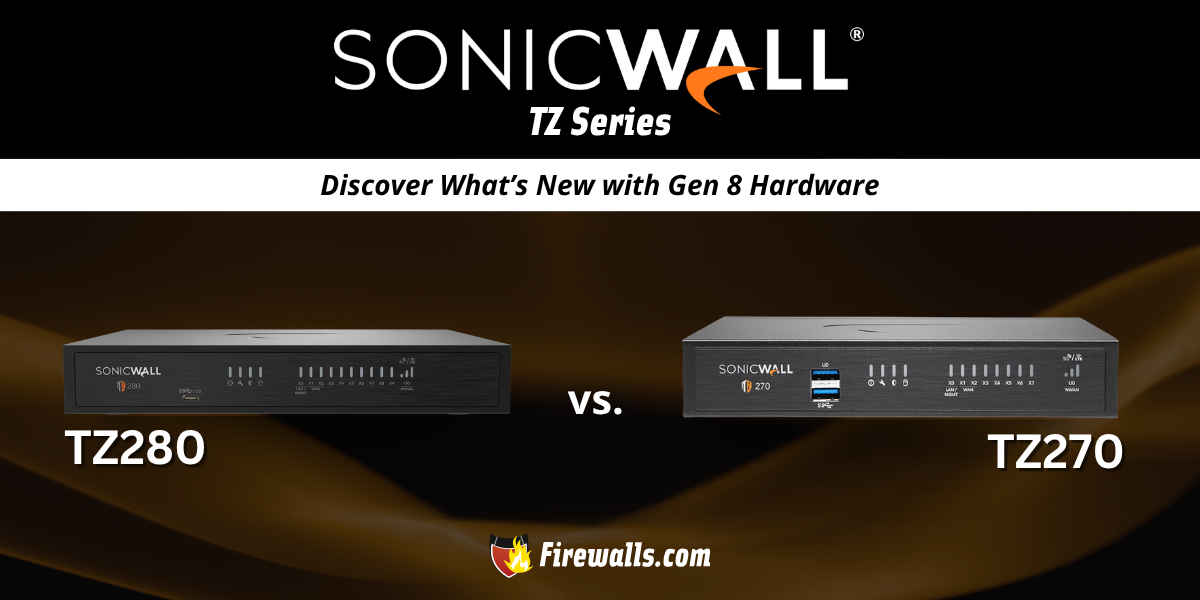
There’s no doubt that the TZ270 still has its place in network security, but the TZ280 is here to meet future demands. Small businesses now require the support of enterprise-level protection, even in more compact firewall models. This firewall comparison of SonicWall TZ 280 vs TZ 270 aims to break down the details on what makes both unique.
On the other hand, for existing TZ270 users, the 280 offers a seamless segue for when it’s time for an upgrade. This article offers insight on both sides of the coin so you can determine which firewall is best aligned with your long-term network demands.
Key Takeaways:
- SonicWall TZ280 delivers higher throughput and stronger scalability for growing networks
- SonicWall TZ270 is a solid option for small businesses with stable performance demands
- TZ280 significantly improves connection handling, VPN capacity, and inspection performance
- TZ270 will reach end of life sooner, making long-term planning an important consideration
- Choosing the right model depends on future growth, traffic demands, and required security capabilities
Highlighting SonicWall Models With Small Businesses in Mind
Before you get into the comparisons, it helps to note that the TZ series from SonicWall is built for small and mid-size businesses as a whole. The compact form factors make them perfect for these environments.
Not only that, but they’re a great starting point for those looking to scale down the road. Overall, you’re getting layered security services that protect your business network without making management all that complicated. However, there are several unique differences when it comes to comparing the specs in SonicWall TZ 280 vs TZ 270.

What is the SonicWall TZ280?
What really makes the TZ280 stand out is that it’s a part of the SonicWall Gen 8 firewalls lineup. Still designed for strong protection with simple configuration, it also comes with SonicOS 8.
Here’s what some of the surface-level specs look like for this model:
- Firewall Throughput: 2.5 Gbps
- Threat Prevention Throughput: 1 Gbps
- App Inspection Throughput: 1.5 Gbps
- IPS Throughput: 1.5 Gbps
- Connections per Second: 12,000
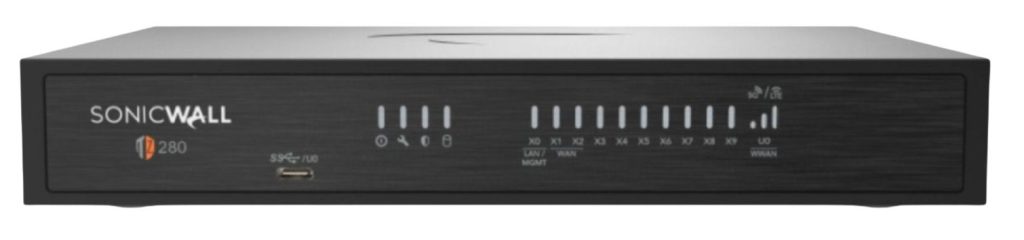
Now, if you don’t have anything to compare this to, it may not seem like much at first. In reality, it’s more than enough for many small businesses. This doesn’t mean it’s better in every way compared to the TZ270, but finding those differences in the fine print is crucial for decision-making.
What is the SonicWall TZ270?
It’s true that SonicWall firewalls from their Gen 7 have many similar capabilities, but you’re here to learn about what sets them apart. The TZ270 is still a strong option in its own right, but remember, it’s more important to focus on what’s right for your exact network needs.
Below is a short comparable list of specifications you can reference:
- Firewall Throughput: 2 Gbps
- Threat Prevention Throughput: 750 Mbps
- App Inspection Throughput: 1 Gbps
- IPS Throughput: 1 Gbps
- Connections per Second: 6,000
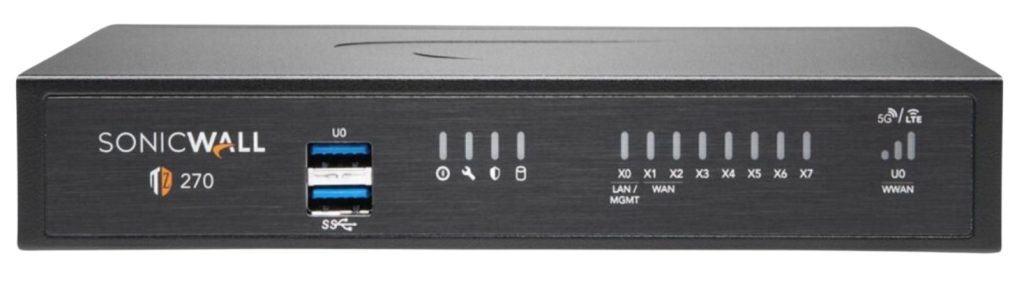
Once again, this is more than suitable for many businesses out there. Nevertheless, it’s easy to see where the TZ280 offers a few stronger capabilities. Another point to consider here is that the TZ270 will inevitably reach its end of life (EOL) before the 280. Whether you already have this firewall model or are looking for your first, this is an important detail to keep in mind for the long run.
SonicWall TZ 280 vs TZ 270 Next Generation Firewall Comparison
For the most part, the TZ 280 and TZ 270 differ in processing efficiency, as well as traffic handling capabilities. For the sake of your business, going through a next generation firewall comparison for best choice will always come down to your unique demands. The table below offers a side-by-side breakdown of several spec categories that can help support your decision-making.
| Specifications | TZ280 | TZ270 |
|---|---|---|
| Firewall Throughput | 2.5 Gbps | 2 Gbps |
| Threat Prevention Throughput | 1 Gbps | 750 Mbps |
| App Inspection Throughput | 1.5 Gbps | 1 Gbps |
| IPS Throughput | 1.5 Gbps | 1 Gbps |
| Anti-Malware Inspection Throughput | 1 Gbps | 750 Mbps |
| IPSEC VPN Throughput | 1.2 Gbps | 750 Mbps |
| Connections per Second | 12,000 | 6,000 |
| Max Connections (SPI) | 1,000,000 | 750,000 |
| Site-to-Site VPN Tunnels | 200 | 50 |
| Storage | Up to 512 GB | Up to 256 GB |
| Interfaces | 8 x 1GbE Cu 2 x 1G SFP 1 console (Micro-USB) 1 USB (type-C) | 8 x 1GbE 2 x USB 3.0 1 Console |
It isn’t hard to see where the improvements are between the two. Always keep in mind that the long-term value for you lies in the scalability and feature access. Both models are viable choices for growing businesses, but only one will be optimal when it comes to your specific operation.
The Final Word
Offering strong performance with future-ready capabilities, comparing SonicWall TZ 280 vs TZ 270 means diving deeper into the details. Both of these SonicWall models come with quite a few upsides, but that doesn’t mean both are on equal ground.
In truth, it’s the TZ280 that’ll prepare your network for the years to come. Considering the TZ270 will eventually see its EOL, it doesn’t hurt to start with Gen 8 or plan for upgrades ahead of time. The team at Firewalls.com is here when you need us. Whether it’s choosing the right firewall hardware or seeking help with managed services, get in touch to learn more about how we can help.
FAQ
How Does Gen 8 Hardware Improve Performance in the SonicWall TZ280?
Gen 8 hardware enhances processing efficiency, which allows the TZ280 to handle more simultaneous connections. This also includes deeper traffic inspection without slowing overall network performance.
What Type of Business Environment is Best Suited for the SonicWall TZ270?
The TZ270 is ideal for small offices or branch locations. More specifically, those with consistent traffic patterns and relatively moderate security demands.
How do Connection Limits Impact Real-World Network Performance?
Higher connection limits, like those found with the TZ280, allow more users, devices, and sessions simultaneously. This is made possible without running into congestion or dropped connections.
Are There Differences in Hardware Interfaces Between the Two Models?
Yes, the TZ280 includes additional interface options, such as SFP ports and updated connectivity. Another way to look at this is more flexibility for your network configurations.
Why Does Storage Capacity Matter in a Firewall?
Greater storage helps to support things like more reporting data, logs, and advanced features. This is a bonus when it comes to monitoring, compliance, in addition to long-term analysis.