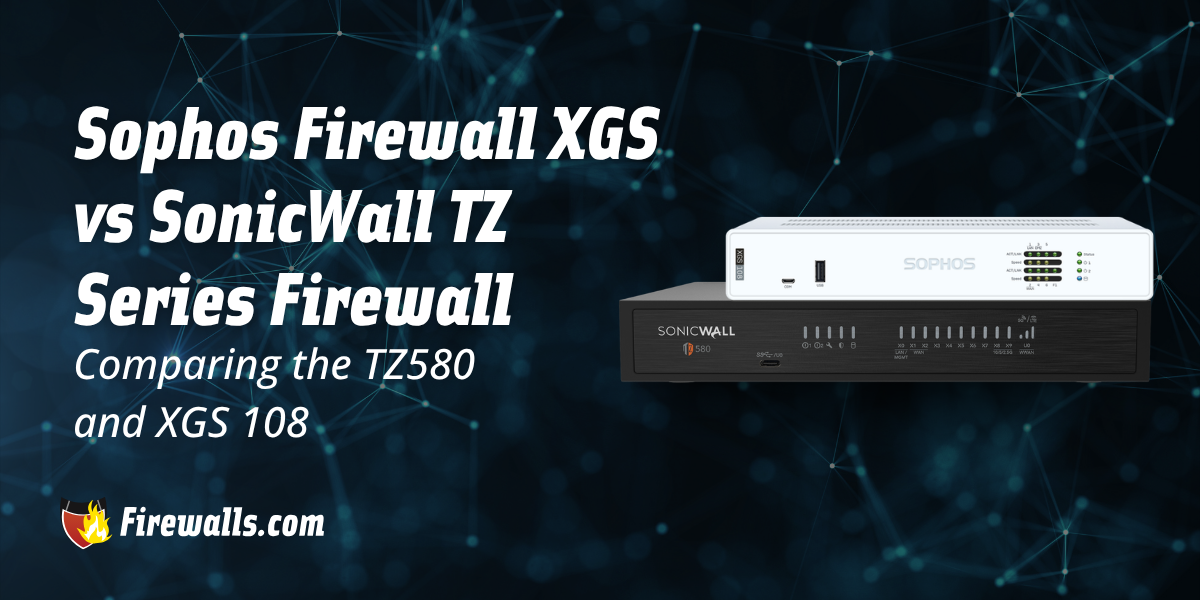
Shopping for the right firewall hardware across Sophos firewall XGS options, as well as SonicWall can seem like a long list to go through. While this is true, depending on how you look at it, there are several ways to help streamline your approach here.
For starters, I like to compare models that have some close-cut similarities involved. More specifically, this article compares the TZ series 580 and XGS 108 to showcase their differences so you can discern which is most aligned with your operation.
Key Takeaways:
- Compare Sophos XGS 108 and SonicWall TZ580 firewall specs, performance, and overall features
- XGS 108 promises higher throughput with AI-powered security focus
- TZ580 delivers flexible deployment and strong, small-business-focused protection
- Always evaluate management tools, scalability, and licensing before making your choice
- Match firewall performance and features with your network’s real-world and long-term demands
Using Firewall Comparisons to End Up With the Right Hardware
If you haven’t already spent the time on it, firewall comparisons can help a ton in finding what’s best for your business network. Aside from all of the surface-level details, making comparisons with features, specs, and other fine print is how you make accurate, long-term decisions.
Sure, performance is definitely an important focal point. I still make it a point to highlight other crucial angles, like included management tools, scope of scalability, or licensing options, for example. When you’re just getting started, it helps to focus on the core details between the two firewalls.
What is the Sophos Firewall XGS 108?
Created for the likes of smaller organizations and distributed networks, the XGS 108 from Sophos hits the sweet spot for many users. Considering it’s also powered by Sophos Xstream architecture, you’re getting more than just optimized security and performance.
Here’s a quick look at the specs behind this next-gen firewall:
- Firewall Throughput: 12.5 Gbps
- IPS Throughput: 2.5 Gbps
- Threat Protection Throughput: 2.5 Gbps
- NGFW Throughput: 2.6 Gbps
- Concurrent Sessions: 4,190,000
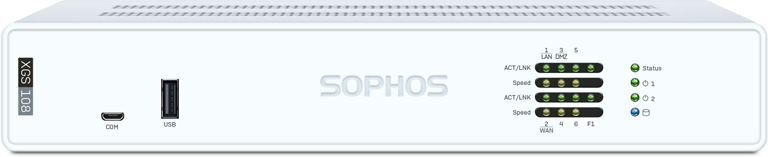
Moreover, you’ll find one of the biggest selling points of Sophos XGS firewalls to be the included AI-driven support. This includes machine learning, cloud sandboxing, DNS protection, and deep packet inspection for a very thorough stance on advanced threat protection.
What is the SonicWall TZ580?
For those eyeing SonicWall Gen 8 firewalls, the TZ580 is a good middle-ground option for most. Organizations ranging from small to mid-sized are the target market for this firewall, and a lot of this can be seen in the hardware’s specs and capabilities.
Below are several comparable points you can size up against the Sophos model:
- Firewall Throughput: 4.5 Gbps
- IPS Throughput: 2.5 Gbps
- Threat Prevention Throughput: 2.2 Gbps
- IPsec VPN Throughput: 2.2 Gbps
- Max Connections (SPI): 1,400,000
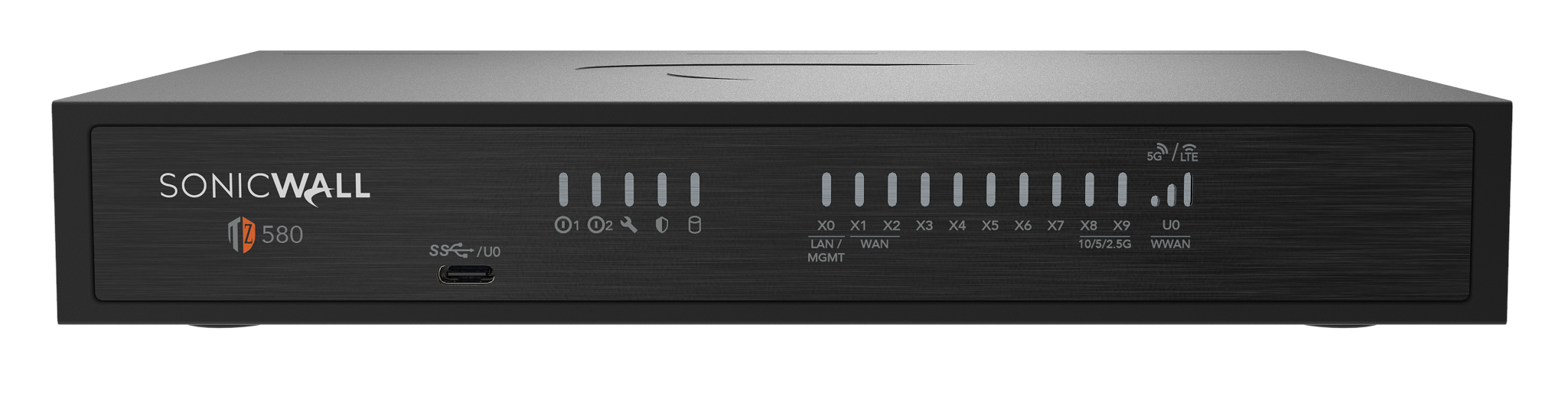
You’ll also benefit from support for Zero-Touch Deployment as well as SonicExpress onboarding. I can’t forget the SonicWall Network Security Manager (NSM), which makes it easy for companies and IT teams of all sizes to adapt and manage as they go.
Sophos XGS 108 vs SonicWall TZ580 Firewall Comparisons
To help you and your team really get to the point, I’ve put together some of the most important information so you don’t have to go digging through the TZ and XGS series datasheets. Check out the table below for several decision-making categories you should consider between these two firewalls.
| Specifications | Sophos XGS 108 | SonicWall TZ580 |
|---|---|---|
| Firewall Throughput | 12.5 Gbps | 4.5 Gbps |
| IPS Throughput | 2.5 Gbps | 2.5 Gbps |
| Threat Protection Throughput | 2.5 Gbps | 2.2 Gbps |
| NGFW / TLS Inspection Throughput | 2.6 Gbps (NGFW) | 750 Mbps (TLS) |
| Concurrent / Max Connections | 4,190,000 (Concurrent) | 1,400,000 (SPI) |
| Centralized Management | Sophos Central | SonicWall Network Security Manager |
| AI and Advanced Threat Protection | AI, machine learning, cloud sandboxing, DNS protection, and more | Capture ATP, RTDMI, RFDPI, DNS security, content filtering |
| Interfaces | 6 x 2.5 GE copper 1 x SFP fiber 1 x COM RJ45 1 x Micro-USB 1 x USB 2.0 1 x USB 3.0 | 8 x 1GbE Cu 2 x 5G/2.5G/1G SFP+ 1 x console (Micro-USB) 1 x USB (Type-C) |
It always helps to remember that you’ll find strong suits on both sides of the coin with every firewall comparison. Your next steps are to take this information and compare it against the real-world needs of your business network.
The Final Word
Overall, both the Sophos firewall XGS 108 and SonicWall TZ580 deliver strong next-gen capabilities. However, you should still note that the XGS 108 emphasizes higher throughput and AI-driven security.
With SonicWall in this case, you’re getting flexible deployment, a seamless security ecosystem and small-business-focused results. If you’re still unsure of which way to go, that’s what our experts at Firewalls.com are here for. Come have a chat with us to get in front of the exact piece of firewall hardware your operation needs.
Frequently Asked Questions
What is the Main Difference Between the Sophos XGS 108 and SonicWall TZ580?
The XGS 108 is known for higher throughput and AI-driven security features. With the TZ580, you’ll find a focus on flexible deployment, small business protection, and integrated security management.
Which Firewall Has Better Performance, the Sophos Firewall XGS 108 or SonicWall TZ580?
In this scenario, the XGS 108 comes with higher firewall throughput at 12.5 Gbps, compared to the 4.5 Gbps from the TZ580.
Are the XGS 108 and SonicWall TZ580 Designed for the Same Type of Company?
Both firewalls are built for small to mid-sized organizations. This includes examples like branch offices or those dealing with distributed networks.
How do Sophos Central and SonicWall NSM Compare?
Regardless of which route you go with here, both provide centralized management. This includes support with configuration, monitoring, and maintenance of your firewall environment as a whole.
Which Firewall Should a Business Choose Between the XGS 108 and the SonicWall TZ580?
Your best choice here will always depend on factors like your network size, security demands, management preferences, and future scalability needs. It’s about what your network needs now and in the near future.