If you’re going down the rabbit hole of comparing two different firewall manufacturers, then it’s important to look at this through a nuanced lens. Any high performance firewall will look different from the next. However, when they come from two different providers, you’re comparing more than just a list of specs.
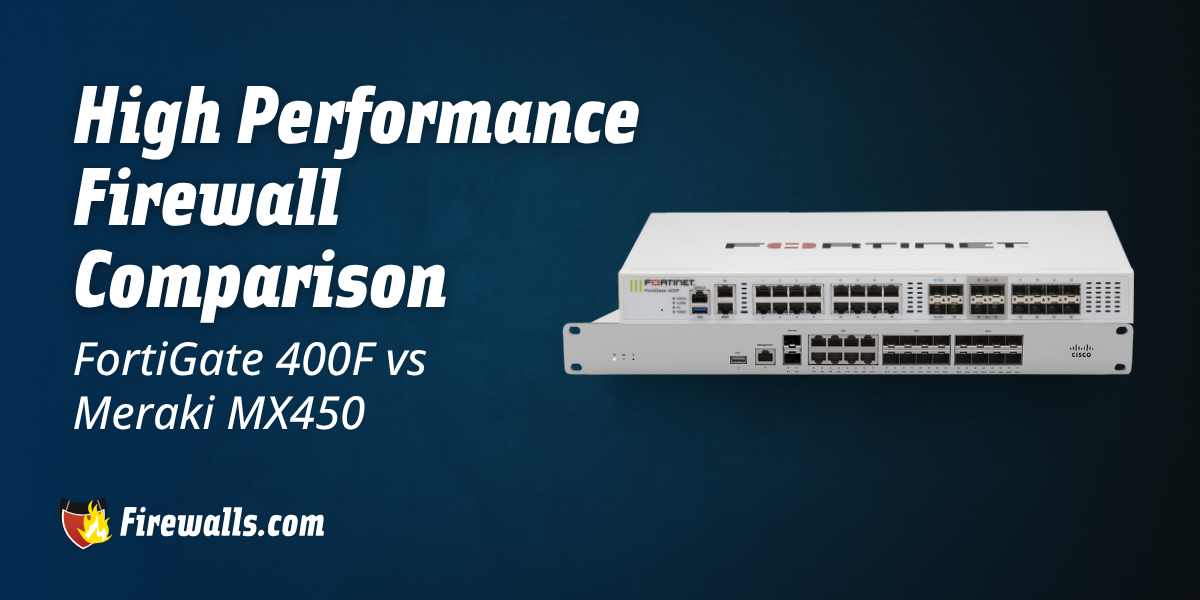
While both the FortiGate 400F and Meraki MX450 are enterprise-grade, there are plenty of differences in the features and capabilities. This article offers a firewall comparison between these two models to help you get better aligned with the right piece of hardware.
Key Takeaways:
- FortiGate 400F promises significantly higher firewall throughput
- The MX450 supports up to 10,000 recommended clients for large-scale deployments
- The 400F provides substantially greater VPN and concurrent session capacity
- Meraki MX450 is known for its combination of enterprise security through cloud-based management and centralized admin
- Both firewalls deliver distinct strengths for differing enterprise network requirements
Building a Stronger Network With a High Performance Firewall
I strongly feel that every modern business needs to keep the mindset of prioritizing a stronger network. When it comes to IT, it’s vital to cover more than the basics and essentially leave no room for error. This not only requires understanding your own network demands, but also how to create a layered security stack.
A big part of this is the enterprise firewall solutions at the helm of it all. Getting positioned with the right firewall hardware is what sets you up to build out a thorough security strategy on multiple fronts. If you’re going to effectively navigate the FortiGate 400F and MX450, you need to know where the core differences are.

What is the Fortinet FortiGate 400F Firewall?
Built as an enterprise next-gen firewall, the FortiGate 400F blends firewall protection, VPN, app visibility, advanced threat prevention, and more. Moreover, the security hardware comes with AI-powered security services, a big plus in this day and age.
Check out this brief list of leading specifications for the 400F:
- Firewall Throughput: 79.5 Gbps
- IPsec VPN Throughput: 55 Gbps
- IPS Throughput: 12 Gbps
- NGFW Throughput: 10 Gbps
- Max Concurrent Sessions: 7.8 million
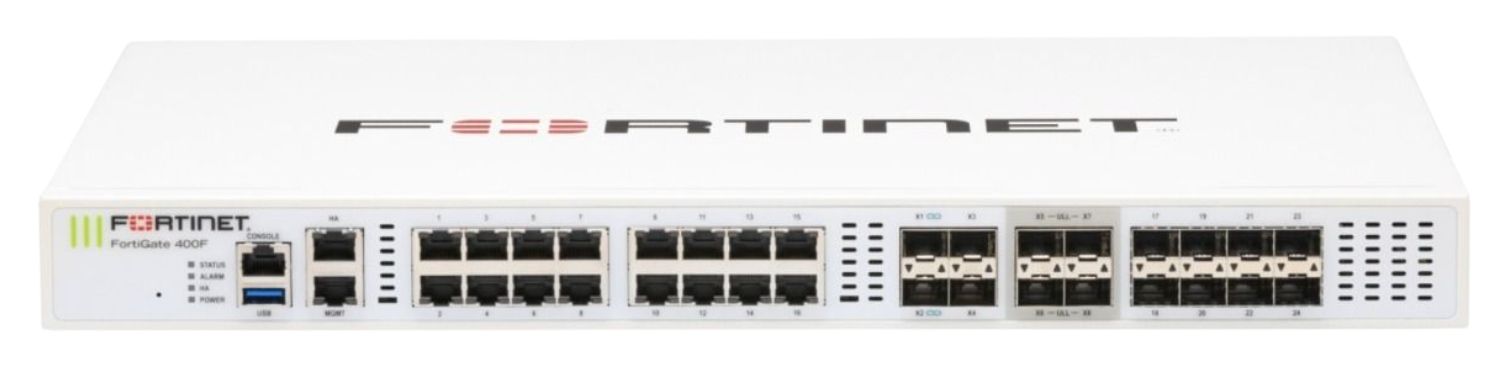
If you know anything about IT or network security hardware, these specs do a lot of the talking for themselves. For those who aren’t too sure of what they’re looking at, those specs above offer a powerhouse, to say the least. Then again, as I always like to note, that doesn’t make it an automatic winning choice for every organization out there.
What is the Meraki MX450 Enterprise Firewall?
Another enterprise-ready option, the Meraki MX450 is built with the likes of large campuses and distributed operations in mind. With this firewall, the first target market I imagine are those with hybrid or fully remote workforces.
Here’s a quick overview of several comparable specs:
- Firewall Throughput: 6 Gbps
- Advanced Security Throughput: 4 Gbps
- Max VPN Throughput: 2 Gbps
- Recommended Clients: 10,000
- Max Concurrent VPN Tunnels: 5,000

When you also tack on the cloud-based management and centralized admin, the MX450 makes out to be a pretty reliable piece of security hardware. I always like to highlight the importance of firewall reviews here, as you can already see some staggering differences between the two.
On another note, you might be wondering how both firewalls are enterprise-grade, even with the MX450 specs looking so different. It’s more about the entire security ecosystem rather than throughput specs alone.
Once you start looking at the bigger picture, the datasheets and fine print specs start to make a lot more sense. From there, it only gets easier to align your network with proper enterprise firewall solutions.
FortiGate 400F vs Meraki MX450 High Performance Firewall Comparison
Taking very different approaches to high performance firewall solutions, the FortiGate 400F and MX450 bring quite a bit to the table. Whereas the 400F prioritizes higher throughput capability, the MX450 is celebrated for its cloud-based centralized management. Give the table below a quick read-through for a no-fluff next generation firewall comparison between the two.
| Specifications | FortiGate 400F | Meraki MX450 |
|---|---|---|
| Firewall Throughput | 79.5 Gbps | 6 Gbps |
| Advanced Security / NGFW Throughput | 10 Gbps NGFW throughput | 4 Gbps advanced security throughput |
| Threat Protection Throughput | 9 Gbps | N/A |
| VPN Throughput | 55 Gbps IPsec VPN throughput | 2 Gbps max VPN throughput |
| Concurrent Capacity | 7.8 million concurrent TCP sessions | 5,000 max concurrent VPN tunnels |
| SSL / Security Processing | 3.6 Gbps SSL VPN throughput and 8 Gbps SSL inspection throughput | Cisco SNORT-based intrusion prevention, Cisco AMP, content filtering, web search filtering, and geo-IP firewall rules |
| Interfaces | 1 x USB 1 x RJ45 console 2 x GE RJ45 MGMT/HA ports 16 x GE RJ45 ports 4 x 1GE/10GE SFP+ slots 4 x 10GE SFP+ Ultra Low Latency slots 8 x 1GE SFP slots | 2 x 10GbE SFP+ WAN 1 x USB for cellular failover 8 x GbE RJ45 LAN 8 x GbE SFP LAN 8 x 10GbE SFP+ LAN |
Although it’s important to look into the positive differences between firewall hardware, you also have to be objective about what is and what isn’t. With the FortiGate 400F, you’re looking at a clear advantage in raw firewall, NGFW, and threat protection throughput.
On the other hand, the Meraki MX450 blends performance with cloud-management, SD-WAN support, and centralized visibility. Moreover, it provides extensive high-speed connectivity, including multiple 10GbE interfaces.
Let’s Wrap Up
Looking at this high performance firewall comparison objectively, the FortiGate 400F is a stronger option for companies aiming for raw firewall and security performance. However, the Meraki MX450 carries an emphasis on cloud management and centralized admin, perfect for distributed organizations.
Of course, there are always many other firewall options out there if either of these models don’t fit the bill. For those who could use a little extra support on finding reliable enterprise firewall solutions, our team at Firewalls.com is on standby when you’re ready to talk.
Frequently Asked Questions
Which Firewall Has Higher Throughput, the FortiGate 400F or Meraki MX450?
The FortiGate 400F has up to 79.5 Gbps of firewall throughput compared to the 6 Gbps of the MX450.
Is the FortiGate 400F or Meraki MX450 Better for Large Organizations?
Both support the needs of differing enterprise environments, but the 400F prioritizes performance capability, while the MX450 supports up to an impressive 10,000 clients.
How Does VPN Performance Compare Between the FortiGate 400F and MX450?
The FortiGate 400F offers up to 55 Gbps of IPsec VPN throughput, compared with 2 Gbps for the MX450.
What Makes the Meraki MX450 Different From the FortiGate 400F?
With the MX450, you’re getting an emphasis on cloud-based management, centralized admin, and SD-WAN capabilities.
Which Firewall Should My Company Choose?
For higher performance, go with the FortiGate 400F, but if you need cloud-managed and centralized admin and visibility, the MX450 may be the better option here.