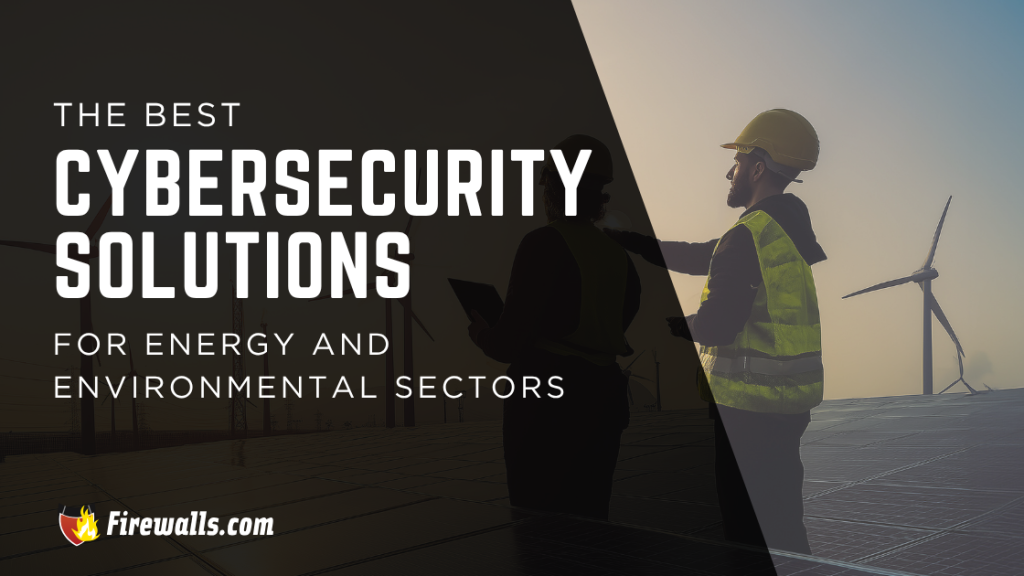
There are many reasons why companies in the energy and environmental sectors are looking for the best cybersecurity solutions possible. Part of it is demand, but this comes from several angles as well. The industry is becoming much more digitized, which means network security options are a must.
You don’t have to look very far to see the many cybersecurity issues that are rising across the world. Regardless of industry, phishing scams, ransomware, and supply chain attacks are becoming more common. This article takes a specific look at the energy and environmental sectors and the best cybersecurity solutions that are built to support the network demands.
Key Takeaways:
- Traditional network security setups are no longer sufficient for modern cybersecurity threats.
- Rapid digitization across these sectors has opened up many new attack surfaces.
- Hardware and network security upgrades are a must for centralized security and regulatory compliance.
- Scalable firewall solutions are necessary for growing networks, expanding businesses, and outdoor operations.
- Cybersecurity investments in smart grid technology are quickly growing as we speak, with an expected $13.9 billion market size by 2029.
Security Challenges in the Energy and Environmental Industry
The realm of IT has been under quite a bit of stress in recent years. A lot of this comes from the rapid changes in cybersecurity, and this trickles into every industry it touches. You can find plenty of positives in smart grid tech and IoT field devices, but they aren’t enough on their own.
Here’s a quick overview of the security challenges these industries are facing:
- Legacy network security infrastructure isn’t built for the demands of cybersecurity challenges
- Bigger attack surface with the expansion of digital tools, cloud tech, and remote workforces
- The need to meet compliance with today’s security standards and regulations
- Geographic distribution of collaborative and effective network security infrastructure
- Proactive incident detection, response, and recovery
It’s more detailed than this, but it’s evident there’s a call for improvements in network security. Cybersecurity solutions providers are already one step ahead, and this can be seen in the adaptable tech they deliver.
The Best Cybersecurity Solutions for Your Network Security
As you go through the available firewalls in network security, it’s easy to get overwhelmed with the sheer number of options. Where you fine-tune your approach is in the specs of the solutions you’re reading through. Whether it’s hardware, software, or entirely cloud-focused, it’s crucial to look at the capabilities.
Not only should you cater to your existing security needs, but also carry a sense of hindsight as well. The firewall solutions mentioned below can help you meet today’s cybersecurity requirements and support energy and environmental sectors for the long term.
1. SonicWall NSa Series
Aside from things like advanced throughput and threat detection, the NSa series from SonicWall is ideal for these industries on several fronts. The short version is that many of these firewalls are great for large-scale operations. Whether this is in a single building or virtual, widespread environments, the firewalls are built for the job.
You get the benefit of centralized compliance control. In addition to that, real-time monitoring and analytics improve security for plants, smart grids, or field-related tasks. Energy and environmental industries overlap but are very robust and diverse on their own. You need firewall hardware that can offer centralized management with uniform security across your entire network.
2. Barracuda Networks F-Series Firewalls
Regardless of the manufacturer, you’re always bound to find a few similarities here and there. With Barracuda Networks, you’re getting the unique benefit of centralized cloud management. Simplifying deployment and management, their firewall solutions are great for environmental monitoring.
Barracuda’s lineup is more than sufficient for scaling too. From small operations to full-scale utilities and swaths of environmental network architecture, Barracuda adapts. Even though firewall catalogs can come with an overwhelming number of options, this is a good thing. It ensures you can scale with the same product line for the long term.
3. Sophos XGS Series
This is another leading name in the realm of cybersecurity. Sophos has been around for a while, and their current XGS series is what’s holding the torch.
These are just a few of the core benefits you’ll find in Sophos firewalls:
- Xstream architecture for accelerated threat isolation and network optimization
- Reduces your attack surface with intrusion prevention
- Includes dynamic updates for an adaptable support system to changing cyber threats
- Easily protects the most essential operating technology in your network, whether inside or out in the field
Energy and environmental sectors commonly work with a lot of space. This includes more than just office space, which means they need network security that can span as far as they do.
Considering the global smart grid cybersecurity market is on track to reach $13.9 billion by 2029, there’s going to be a lot of investment in this space. Mind you, this is a leap from $6.4 billion back in 2022. Many factors play into this, but the shifting tone in cybersecurity incidents is a heavy player.¹

Final Thoughts
There’s no single, uniform way to tackle cybersecurity within the energy and environmental sectors. Your focus should start with the immediate demand and then consider how those demands will change when you scale.
Firewall hardware doesn’t last forever, and scaling your network security architecture is crucial alongside business objectives. Learn more about the best cybersecurity solutions for these industries by giving our team a shout. We’ll take your current situation and guide you to the cybersecurity services and hardware you need most.
References:
- https://www.statista.com/statistics/1304471/global-smart-grid-cyber-security-market-value/