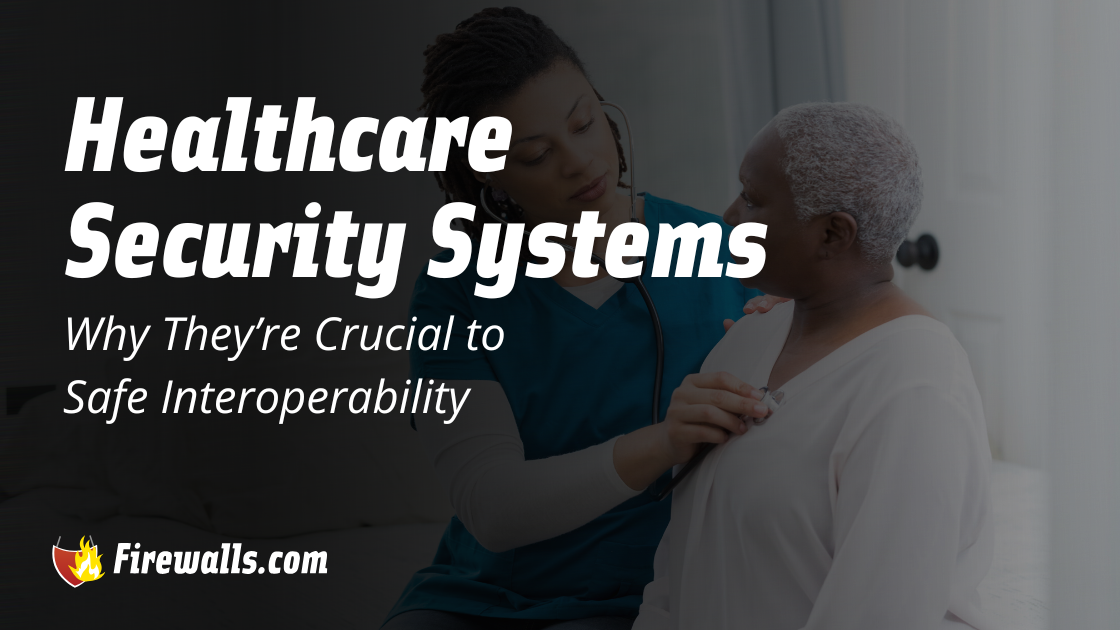
Enabling the seamless sharing of patient data, secure interoperability is a must in the healthcare space. Healthcare security systems consider several factors. However, it isn’t just about a secure network, but ensuring care coordination, diagnosis speed, and workflow outcomes.
With today’s modern healthcare networks, new advancements like telemedicine, interconnected electronic health records (EHRs), and diagnostic tools require layered security measures. These advancements may come with many benefits, but they’re also another potential security risk.
At this point, it should be no secret that security breaches in healthcare are a major concern, and the risks evolve year after year. In this article, you’ll gain a better understanding of why effective healthcare security systems are crucial to safe interoperability.
Key Takeaways:
- Secure interoperability guarantees seamless sharing of patient data across healthcare systems
- Networks in the healthcare industry face frequent vulnerabilities in endpoint protection, EHRs, outdated software, and more
- Only 35% of surveyed U.S. healthcare organizations were able to beat a ransomware attack without having to pay in 2024
- In 2024, three in four hospitals reported that data breaches directly impacted patient care
- Multi-layered network security focuses on firewall hardware, endpoint monitoring, zero-trust network access, secure messaging, staff training, and more
How Data Travels Across Healthcare Networks
Between EHRs, patient portals, and medical devices, there’s always a continuous exchange of patient data to ensure healthcare workers have real-time access. Although this is necessary for proper medical care, data passing through multiple systems like this increases exposure.
Here are a few other important details to consider about this:
- Interoperability helps to enable faster decision-making and ensure continuity of care
- Common vulnerabilities in healthcare networks include unsecured APIs, inconsistent encryption, and outdated software
- Cybercriminals are always looking for weak links to exploit between connected systems
- Strong cyber security for healthcare includes end-to-end encryption, identity verification, and network monitoring
At the end of the day, proper security for the healthcare industry is rather complex, from network hardware, security policies, compliance, and the list goes on. If all of this sounds like overkill, it’s for a good reason.
From a survey taken in 2024, only 35% of healthcare organizations in the U.S. were able to beat a ransomware attack without having to pay. On the other hand, 4% never recovered their data, even though they paid the ransom.1 Without a proper understanding of data security healthcare solutions, these organizations will continue to be susceptible to today’s evolved cyber threats.
The Core Components of Healthcare Security Systems
From network firewalls from SonicWall to access controls, intrusion detection systems, and more, healthcare cybersecurity is one of the most technical out of any industry. It’s more than just protecting networks from unauthorized access. Secure messaging healthcare solutions, changes in industry compliance, and complex internal security policies are a part of this as well.
Starting at the top, one of the most common and trustworthy solutions is firewall hardware. Filtering incoming and outgoing traffic is a leading access control measure in network security. Aside from that, it also helps to ensure that only authorized users can view or modify sensitive patient data.
With the likes of intrusion detection systems, these organizations can monitor for abnormal activity on the network. At the same time, it offers an automatic response to prevent security breaches in healthcare. If you’re wondering how often patients are affected by a data breach, it’s more often than you might expect.
Looking at data in 2024, three in four researched hospitals reported data breaches directly impacting patient care.2 Without a layered security strategy, the risk for healthcare organizations and their patients is stacked pretty high.
Healthcare and Cybersecurity: Building a Proactive Defense Strategy
Thankfully, there’s more than enough support for organizations in this industry to create a layered network defense that works from many angles. Healthcare and cybersecurity will always be evolving topics, but that doesn’t mean there aren’t many solutions to help keep everyone protected.
Take a look at the list below to read into some of the most common network security solutions:
- Firewall hardware is the first line of defense, filtering network traffic, handling network monitoring, and blocking unauthorized access
- Industry frameworks like HIPAA promote regulatory compliance and coordination between IT, compliance, and clinical teams
- Endpoint monitoring is crucial for tracking every connected device on the network
- Zero-trust network access (ZTNA) continuously verifies every user and device, regardless of prior authentication
- Staff training is essential to reduce human error by being able to spot potential security threats in social engineering attempts
Even with all of this, all it takes is an evolved cybersecurity threat to trigger a necessary change in your strategy. Although healthcare organizations face multiple network security threats with each passing year, the solutions are there to help navigate every one of them.
Final Thoughts
Healthcare security systems are an imperative to safe interoperability. Aside from ensuring patient data can move freely without compromise, proper network security protects healthcare organizations from a slew of other potential risks.
With the help of a multi-layered cybersecurity approach, a combination of hardware, software, policy enforcement, and human oversight can deliver complete protection. For those looking for the right solutions to their network demands, the Firewalls team is always here to help. Reach out to our team for guidance on what kind of solutions we feel are best for your unique situation.
FAQ
Why are Healthcare Security Systems Essential for Interoperability?
These systems ensure that patient data can be shared seamlessly and safely across EHRs. This also includes patient portals and medical devices as well.
What are the Common Vulnerabilities in Healthcare Networks?
In many cases, common vulnerabilities in healthcare networks include outdated hardware or software, unsecured APIs, and weak endpoint protection. Another core issue is the lack of security training for employees.
How Can Healthcare Organizations Protect Against Data Breaches?
Healthcare companies can protect themselves and their patients from data breaches with solutions like firewall hardware, endpoint monitoring, utilizing zero-trust network access, secure messaging, and training staff to spot social engineering attempts.