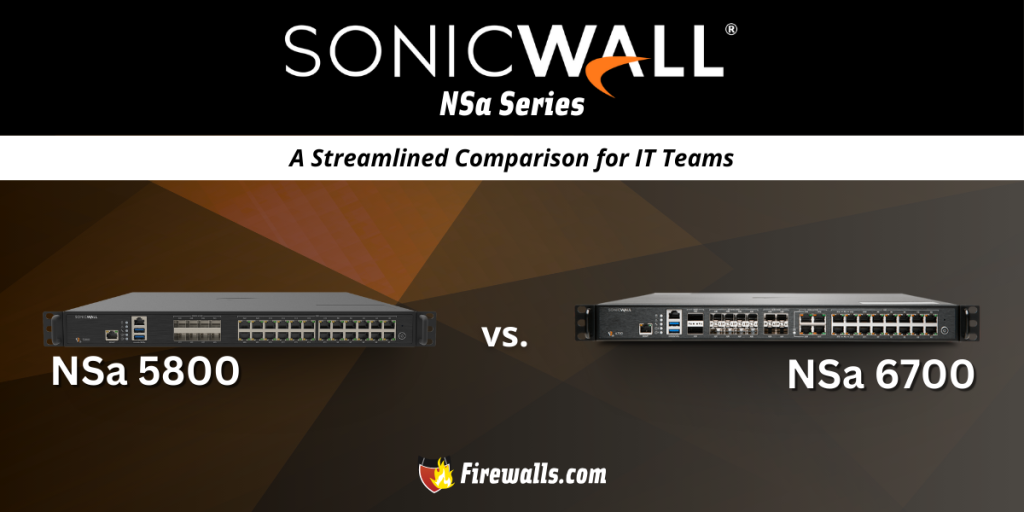
IT teams need high-performance firewalls for several reasons, with a balance between network security and efficiency being a strong focal point. When it comes to the comparison of NSa SonicWall 5800 vs 6700, there’s quite a bit of ground to cover here.
Each model promises unique capabilities, many of which are tailored to specific network environments and traffic loads. Comparing the two firewall solutions helps IT professionals and business owners optimize network infrastructure, as well as deployment decisions. This article focuses on the comparison of the NSa SonicWall 5800 vs 6700 to offer practical and actionable insight for IT teams.
Key Takeaways:
- The NSa 5800 is ideal for large, established enterprises prioritizing throughput capacity
- The NSa 6700 is best for medium to distributed networks and organizations that need scalability
- While the NSa 5800 focuses on throughput capacity, the 6700 prioritizes room for scalability and strong firewall throughput
- Both models offer simplified management interfaces and advanced security license options
- Comparing specs like throughput, VPN capacity, and user support helps IT teams choose the right firewall for their infrastructure
Optimizing Network Infrastructure with the Right Firewall
Choosing the right firewall is a crucial component to maintaining both network security and efficiency as your business scales. A good firewall for business networks includes the traffic flow you need while minimizing potential bottlenecks.
IT teams should not only understand how SonicWall NSa models handle traffic, but also integrate with their existing systems. However, it’s a fine balance between current compatibility and scalability, as both are important considerations for landing on the right SonicWall firewall. In the context of NSa SonicWall 5800 vs 6700, there are several key details that can help lead your network to the right firewall hardware.

What is the SonicWall NSa 5800?
Utilizing Gen8 tech to deliver modern enterprise firewall protection, the 5800 from the SonicWall NSa series is impressive from several angles. Supporting between 2,500 and 5,000 users, it’s more than ideal for large-scale network environments.
Here’s a quick overview of what you can expect from this SonicWall firewall:
- Firewall Throughput: 30 Gbps
- Threat Prevention Throughput: 24 Gbps
- IPS Throughput: 24 Gbps
- IPsec VPN Throughput: 21 Gbps
- Max Connections (SPI): 8,000,000
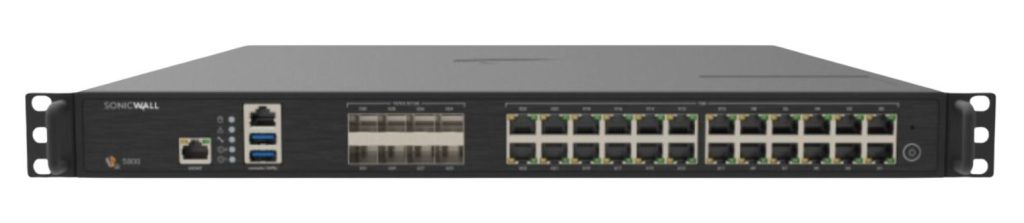
There’s a strong combination of security measures and high throughput here, with simplified management to match. While it comes with much of what IT teams need to navigate network security, that doesn’t make it the universal best choice for every business.
What is the SonicWall NSa 6700?
Also a high-performance firewall for business in its own right, the NSa SonicWall 6700 model is more of a mid-range option. It supports over 2,500 users, leaning more toward the demographic of growing organizations.
Below is a brief comparison of the same firewall specs mentioned above:
- Firewall Throughput: 36 Gbps
- Threat Prevention Throughput: 19 Gbps
- IPS Throughput: 20 Gbps
- IPsec VPN Throughput: 19 Gbps
- Max Connections (SPI): 8,000,000

For IT teams looking for options they can scale with over time, the 6700 from the SonicWall NSa series isn’t a bad way to go. Nevertheless, gaining a deeper understanding of how these firewalls stack up against each other is a must when it comes to making the right choice.
Comparing the NSa SonicWall 5800 vs 6700
Whether you’re looking at the NSa 5800 or 6700, each model is tailored to different performance, deployment, and user needs. While there are several key differences in throughput, this is far from the only specs that matter. Check out the table below for a deeper dive into what makes each of these SonicWall models stand out.
| Specifications | NSa 5800 | NSa 6700 |
|---|---|---|
| Firewall Throughput (Gbps) | 30 | 36 |
| Threat Prevention Throughput (Gbps) | 24 | 19 |
| App Inspection Throughput (Gbps) | 24 | 20 |
| IPS Throughput (Gbps) | 24 | 20 |
| IPsec VPN Throughput (Gbps) | 21 | 19 |
| Max Connections (SPI) | 8,000,000 | 8,000,000 |
| Connections per Second | 240,000 | 228,000 |
| Site-to-Site VPN Tunnels | 6,000 | 6,000 |
| Interfaces | 24 x 1GbE 8 x 10G SFP+ 1 x console (RJ45 to DB9) 2 x USB (USB type-A) | 2x 40G 8 x 25G 4 x10G/5G/2.5/1G SFP+ 4 x 10G/5G/2.5G/1G 16 x 1GbE 2 x USB 3.0 1 Console 1 Management port |
| Storage | 256 GB (Up to 1 TB) | 256 GB M.2 |
Now that you have a better understanding of the two, it’s time to line up the specs with your network demands. Using these practical insights helps to cover your needs in deployment, encrypted traffic management, throughput, and more.
Final Thoughts
At the end of the day, choosing between the NSa SonicWall 5800 vs 6700 depends on the fine print. For the 5800, this model excels in threat prevention and overall security performance; it is better for well-established organizations. With the 6700, this model is a better choice for medium to distributed enterprise networks. and those who are looking to scale in the near future.
You also don’t have to go it alone when it comes to making the right decision. Our team at Firewalls.com is always on standby if you need a little extra help on which of these NSa SonicWall models is best for you.
FAQ
What are the Main Differences Between the SonicWall NSa 5800 and 6700?
The NSa 5800 offers higher throughput in most categories, but the 6700 takes the lead with overall firewall throughput. It helps to remember that both models target different network sizes and deployment needs.
Which Organizations Should Choose the NSa 5800?
More ideal for large, well-established enterprises, the NSa 5800 is better suited to support a prioritization in advanced threat prevention. Moreover, businesses that need support for thousands of users and manage complex network environments would be better off with the 5800.
Who is the NSa 6700 Best Suited For?
The NSa 6700 fits medium to distributed enterprise networks. This also goes for growing organizations that need high firewall throughput, strong VPN performance, and a scalable security option.
How do the Management and Security Features Compare Between the Two Models?
Both firewalls offer simplified management interfaces and support SonicWall’s advanced security licenses. The 5800 emphasizes throughput strength, while the 6700 carries a strong focus on firewall throughput, leaving room for scaling toward upgrades down the road.
How Can IT Teams Decide Which SonicWall Model to Deploy?
IT teams should evaluate user load, throughput requirements, VPN needs, and integration with existing systems. Next, they should align these factors with the performance strengths between the 5800 and 6700 for the best possible firewall solutions.