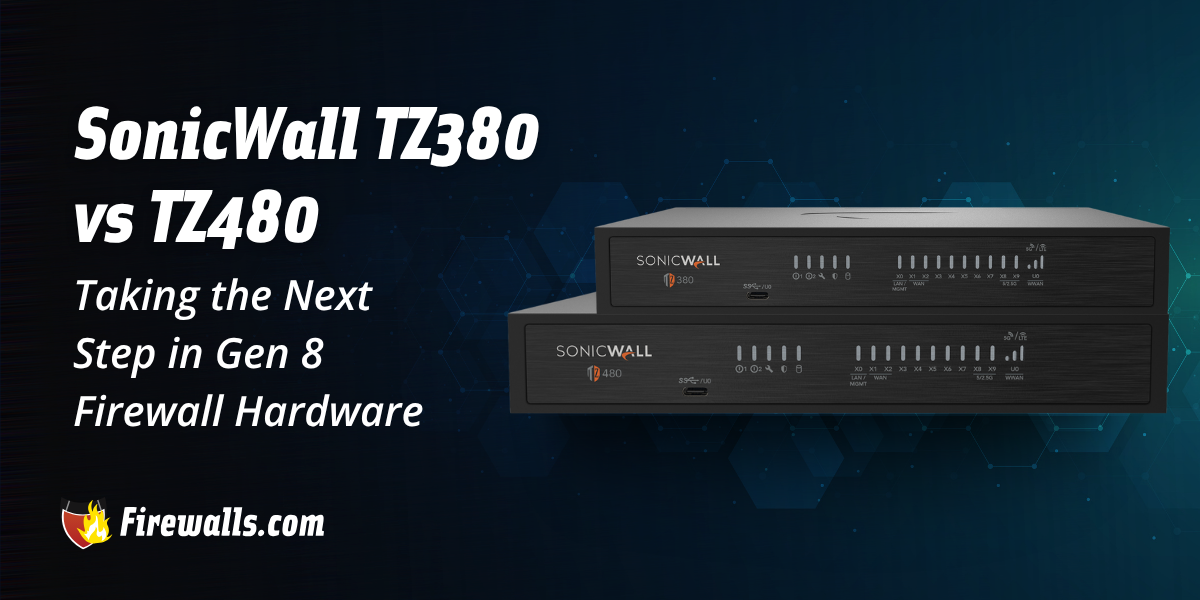
Although both of these firewall models come from the Gen 8 lineup, comparing SonicWall TZ 380 vs TZ 480 helps with understanding their target markets. These include crucial details that will be some of the leading factors in any business or IT team’s decision-making.
Finding the right firewall products requires understanding the fine print of the hardware. In this article, I provide a straightforward look into both firewalls for an easy comparison you can use to support your next steps.
Key Takeaways:
- SonicWall TZ 380 and TZ 480 are mid-range Gen 8 firewalls built for growing networks
- TZ 480 delivers higher throughput and connection capacity for increased demand
- TZ 380 brings enterprise-grade protection aimed at smaller operations and remote sites
- Both models include SonicOS 8 and a range of advanced security features
- Comparing hardware specs helps you make the right long-term choice for your business
The Mid-Range of SonicWall Gen 8 Firewalls
For starters, it’s important to know that the SonicWall TZ 380 and 480 models land in the mid-range of the Gen 8 roster. In simple terms, if you’re an organization that needs something a bit stronger than entry-level performance, these are next in line.
Differences aside, each of these firewalls comes with SonicOS 8, advanced threat prevention, and more. However, the details that really sway you one way or the other will be found in their varying specifications and capabilities.

What is the SonicWall TZ 380?
A great option for smaller operations, such as remote sites or branch offices, the TZ 380 packs in a lot more than you might think. From intrusion prevention to gateway anti-virus, support for zero-touch deployment, and more, it’s a go-to SonicWall NGFW for many.
Here’s a quick look at a few specs details off the top:
- Firewall Throughput: 3.5 Gbps
- Threat Prevention Throughput: 1.5 Gbps
- IPS Throughput: 2 Gbps
- App Inspection Throughput: 2 Gbps
- Max Connections (SPI): 1,100,000
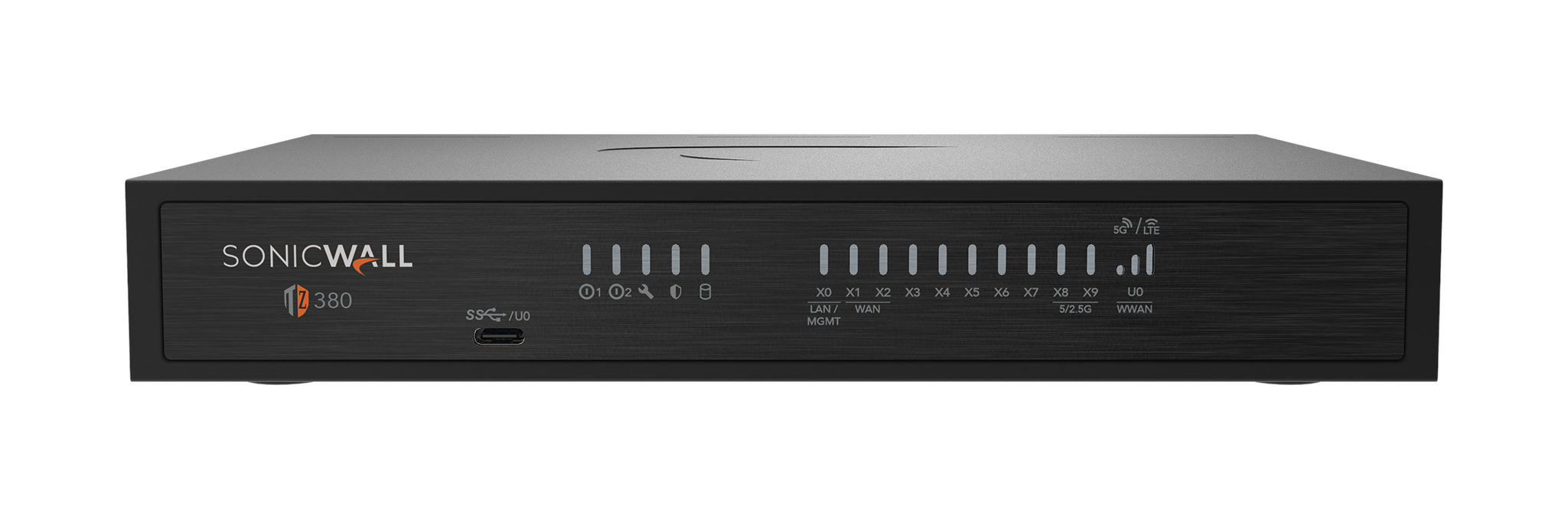
You’ll also find unique differences when it comes to the interfaces of these models, but we’ll get into that more down below. The TZ380 from the SonicWall TZ series comes with the essentials and then some on top, promising years of support. Moreover, it couldn’t be easier to scale with this firewall and upgrade through the SonicWall ranks when you’re ready to expand.
What is the SonicWall NGFW TZ 480?
Once again, you’ll find many similar features and qualities throughout both of these firewalls. However, with the TZ 480, I think it isn’t too difficult to see where the upgrades are.
Here’s what that looks like by the numbers:
- Firewall Throughput: 4 Gbps
- Threat Prevention Throughput: 2 Gbps
- IPS Throughput: 2.2 Gbps
- App Inspection Throughput: 2.2 Gbps
- Max Connections (SPI): 1,200,000
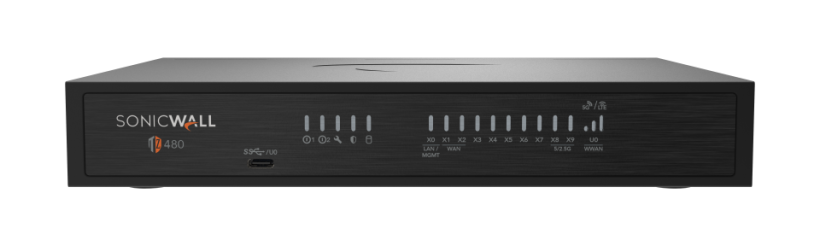
This firewall model also supports up to 2,500 single sign-on users and up to 32 SonicWall access points. It’s a strong focal point in your network security stack, especially for the likes of mid-range, growing organizations that need IT flexibility.
SonicWall TZ 380 vs TZ 480 Firewall Comparison
The only way you’ll know which of these TZ firewalls is best for your operation is to review the specs together. When it comes to a SonicWall next generation firewall, here are some of the most important details you want to compare side by side.
| Specifications | SonicWall TZ380 | SonicWall TZ480 |
|---|---|---|
| Firewall Throughput | 3.5 Gbps | 4 Gbps |
| Threat Prevention Throughput | 1.5 Gbps | 2 Gbps |
| App Inspection Throughput | 2 Gbps | 2.2 Gbps |
| IPS Throughput | 2 Gbps | 2.2 Gbps |
| TLS/SSL Inspection & Decryption Throughput | 600 Mbps | 650 Mbps |
| IPSec VPN Throughput | 1.6 Gbps | 2 Gbps |
| Max Firewall Connections (SPI) | 1,100,000 | 1,200,000 |
| Optional Storage Expansion | Up to 512 GB | Up to 512 GB |
| SAML Single Sign-On Users | Up to 1,000 | Up to 2,500 |
| Interfaces | 8 x 1GbE Cu 2 x 5G/2.5G/1G SFP+ 1 x console (Micro-USB) 1 x USB (type-C) | 8 x 1GbE Cu 2 x 5G/2.5G/1G SFP+ 1 x console (MicroUSB) 1 x USB (type-C) |
The differences might seem minor on paper, but they make a huge difference when it comes to your network performance. Choosing the right firewall means making a decision that will impact your business for years to come.
The Final Word
In the conversation about SonicWall TZ 380 vs TZ 480, you’re looking at two similar firewalls that come with a few finite but important differences. Both models come with the promise of strong protection for modern business networks.
Making a choice between the two is heavily dependent on several key factors. Always ask yourself, what does my network size, traffic volume, and future expansion demand here? To make sure you end up with the right SonicWall NGFW, come have a quick chat with us at Firewalls.com for the support your business needs.
Frequently Asked Questions
What is the Main Difference Between the SonicWall TZ380 and TZ480?
The TZ480 brings higher performance across several key categories, greater connection capacity, and stronger scalability. With the TZ380, this model is definitely more focused on growing, but in smaller network environments.
Is the SonicWall TZ380 a Good Firewall for Brand-New Companies?
Most definitely, for newer organizations that are running a tight ship but still need that enterprise-grade security, the TZ380 is a great start.
Is the SonicWall TZ480 Much Faster Compared to the TZ380?
Looking at the TZ480, you’re getting stronger firewall throughput, threat prevention, and IPS performance, to name a few.
Do the SonicWall TZ380 and TZ480 Use the Same Operating System?
Yes, both firewalls run on SonicOS 8 and come with advanced security features like intrusion prevention, anti-malware protection, and more.
Which SonicWall Firewall Should a Growing Business Choose?
Companies expecting increased users, traffic, or connected devices can easily benefit from the TZ480. For those working in smaller environments but still expecting to scale, the TZ380 is a good direction to look into.