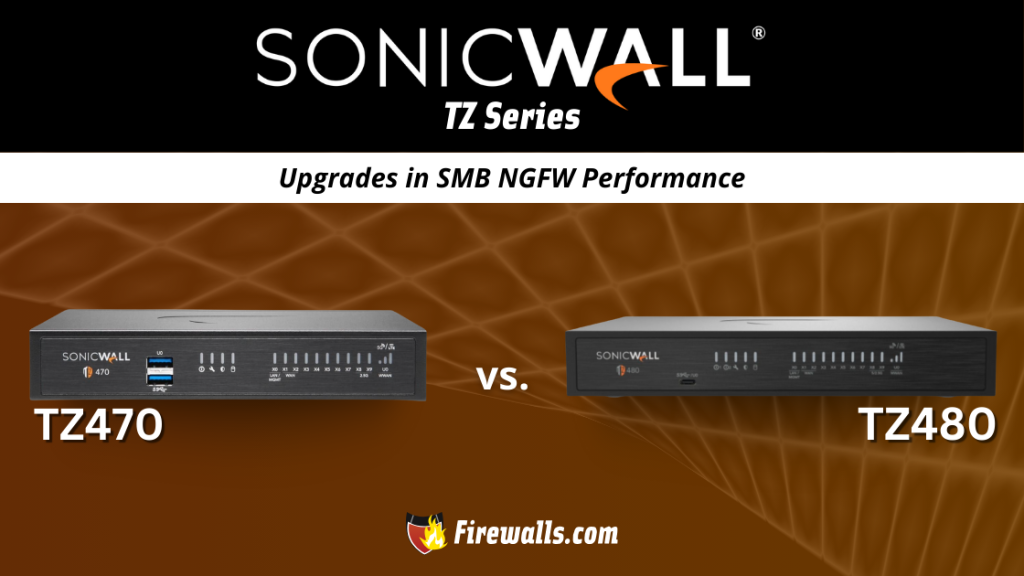
The 470 model in the TZ series from SonicWall has been a reliable choice for many organizations, and still is. On the other end of that coin, the manufacturer has finally released Gen 8, which is a step up when it comes to the newer TZ480 model. That means when you take an objective look at SonicWall TZ470 vs TZ480, you’re going to easily see where the upgrades are.
While they’ll also share some similarities in the datasheet, what you want to look for are the specs that make them identifiably unique. For this article, you’re getting a no-fluff look at that information to help streamline your decision-making for the longevity and security of your business network.
A Look Into a Newer Generation of Firewall Hardware
New firewall models landing on the market are a common procedure, but it only happens every three to five years or so. Not only is this a great window to start considering an upgrade, but it’ll eventually become a necessity depending on how your business grows over time.
What worked for your network security five years ago may not be the case today, and the last thing you want is a stacking list of vulnerabilities. SonicWall firewalls and the different models available are known to be reliable across the board, but what’s best for your organization likely slims down to a handful of options at most. Before you can determine what route you need to take for your network, you’ll need to dive into a no-fluff SonicWall model comparison.
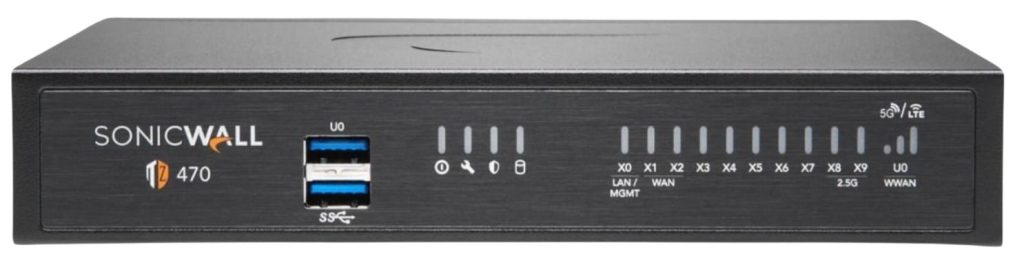
What is the SonicWall TZ470?
With the reliable TZ470, you get a piece of hardware that’s built for small business scalability and simplified management. It supports a user count rating of 26 to 35. On top of that, it’s compatible with various security licenses to help create robust network protection.
When it comes to the datasheet, here’s what you’ll want to look at first:
- Firewall Throughput: 3.5 Gbps
- Threat Prevention Throughput: 1.5 Gbps
- Application Inspection Throughput: 2 Gbps
- IPS Throughput: 2 Gbps
- Max Connections (SPI): 1,000,000
If this sounds like more than enough for your network demands, there’s nothing wrong with that at all. There isn’t even an end-of-life (EOL) date for this model yet, but that doesn’t mean it’s the automatic perfect choice. You’ll find a lot of specs behind SonicWall firewall models, which is why comparisons with their new tech are so important. You might be surprised by what you find inside the newer TZ480.
What is the SonicWall TZ480?
Perfect for small businesses looking for enterprise-grade security and support for remote workforces, the TZ480 comes with some impressive details. Whether you’re prioritizing zero-touch deployment, encrypted traffic, or effortless policy management, the TZ480 handles all of this and more.
Take a quick look at the comparable details below:
- Firewall Throughput: 4 Gbps
- Threat Prevention Throughput: 2 Gbps
- Application Inspection Throughput: 2.2 Gbps
- IPS Throughput: 2.2 Gbps
- Max Connections (SPI): 1,200,000
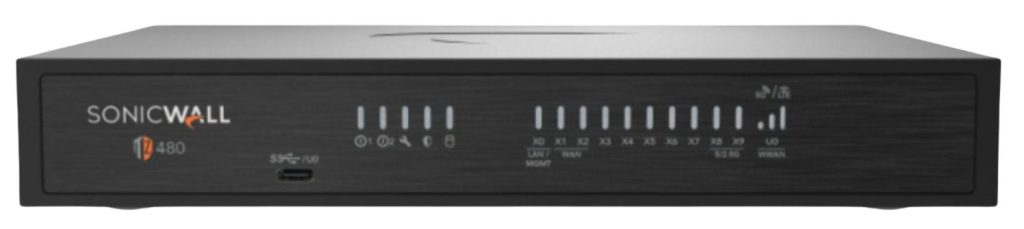
It’s more than just a little extra capacity in comparison; it’s about having a bit of hindsight with your operation’s network security demands. The TZ470 might be good for you at this very moment, but can you say the same in the coming years ahead?
Considering the new age the TZ480 is able to usher your network into, it could very well be the best choice for the long run. Of course, the specs mentioned above aren’t the only categories that matter. It’s always a good idea to take a deeper look at the numbers.
SonicWall Model Comparison TZ470 vs TZ480
If you’ve ever tried reading through a datasheet, it’s easy to get a little overwhelmed with the technicalities. To help with that, the table below covers many of the key details you’re looking for that’ll help align your decision-making with the right firewall hardware.
| Specifications | SonicWall TZ670 | SonicWall TZ680 |
|---|---|---|
| Firewall Throughput (Gbps) | 3.5 | 4 |
| Threat Prevention Throughput (Gbps) | 1.5 | 2 |
| Application Inspection Throughput (Gbps) | 2 | 2.2 |
| IPS Throughput (Gbps) | 2 | 2.2 |
| IPsec VPN Throughput (Gbps) | 1.5 | 2 |
| Connections per Second | 12,000 | 18,000 |
| Max Connections (SPI) | 1,000,000 | 1,200,000 |
| Max Connections (DPI) | 250,000 | 350,000 |
| Site-to-Site VPN Tunnels | 150 | 200 |
| Interfaces | 8 x 1 GbE 2 x 2.5 GbE 2 USB 3.0 1 Console | 8 x 1 GbE Cu 2 x 5G/2.5G/1G SFP+ 1 console (Micro-USB) 1 USB (type-C) |
While some of these specs aren’t too far off from each other, their limitations can make a world of difference when it comes to your network demands. Firewalls and network security consider many different layers when it comes to every layer of your setup. At the end of the day, it’s a lot of the fine print that’ll guide which route you take over the next few years, at least.
The Bottom Line
Specifications aside, you’re also getting the SonicOS 8 with the new-gen hardware, among the many other ramped-up capabilities. If you’re currently sitting on the TZ470, then the smartest upgrade would be to the TZ480.
For those looking for a new manufacturer or their first firewall setup, getting the latest gen in SonicWall firewall models isn’t a bad idea. To help navigate any questions you have in the meantime, the Firewalls team is always here to assist, so don’t hesitate to get in touch for an expert opinion.