With both firewall manufacturers being known for their enterprise-grade security solutions, it can be challenging to discern which route to take. Above all else, your business network is in good hands either way, but comparing SonicWall vs Fortinet options is still important.
More specifically, the NSa 5800 and FortiGate 400E are relatively on par with each other in many ways. However, the differences are in how you’ll be able to align your network demands with the right piece of security hardware. This article focuses on comparing the two options from these popular security vendors so you can find out which is best for you.
Key Takeaways:
- SonicWall NSa 5800 and FortiGate 400E both provide strong security, performance, and simplified management for business networks
- NSa 5800 supports up to 5,000 users, while the 400E is better suited for 300 to 500 users
- The 400E supports 2,000 gateway-to-gateway tunnels, and the NSa 5800 handles up to 6,000 site-to-site VPN tunnels
- In this comparison, SonicWall delivers higher IPS and threat prevention throughput, while FortiGate leverages AI and ML-powered FortiGuard
- The best option is what aligns most with your network size, traffic demands, and goals surrounding future expansion
Finding the Right Firewall for Your Business
Choosing the right firewall vendor is a step that every business will eventually have to navigate. It’s an essential to overall security, as well as key factors like performance and network scalability.
Under the scope of Fortinet vs SonicWall, both offer enterprise-grade solutions. However, they differ with specific factors like architecture, user capacity, and their broad range of features. Although both are stellar options, this firewall comparison is aimed at guiding you toward which is most relevant to your business needs.
What is the SonicWall NSa 5800?
Utilizing SonicWall’s Gen 8 architecture, the NSa 5800 gives you the high performance and simplified management businesses can rely on. It also features an intuitive interface for simple configuration, monitoring, and policy enforcement.
Here’s a quick look at the specifications:
- Firewall Throughput: 30 Gbps
- IPS Throughput: 24 Gbps
- IPSec VPN Throughput: 21 Gbps
- Site-to-Site VPN Tunnels: 6,000
- Max Connections (SPI): 8,000,000
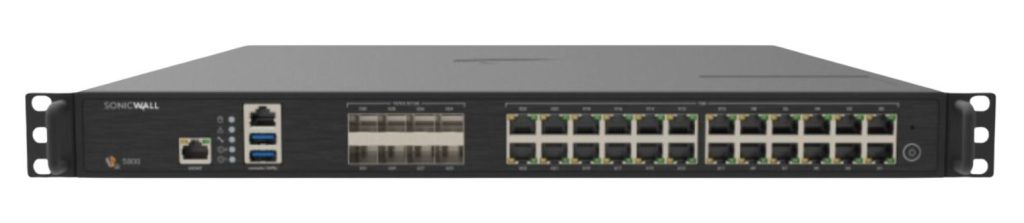
There are also several license bundles to consider here. You can’t forget about the feature benefits like intrusion prevention, real-time malware inspection, and advanced threat detection. Overall, the NSa 5800 SonicWall NGFW carries a strong focus on comprehensive protection.
What is the Fortinet Firewall 400E?
Rated for 300 to 500 users, sizable throughput, and support for on-prem and hybrid networks, the 400E from FortiGate firewalls is impressive in its own right. There’s also the benefit of AI and ML-powered FortiGuard, which supports proactive security and integrated network intelligence.
Here’s a brief overview of what this firewall’s specs look like:
- Firewall Throughput: 32 Gbps
- IPS Throughput: 7.8 Gbps
- IPSec VPN Throughput: 20 Gbps
- Gateway-to-Gateway VPN Tunnels: 2,000
- Concurrent Sessions (TCP): 4,000,000
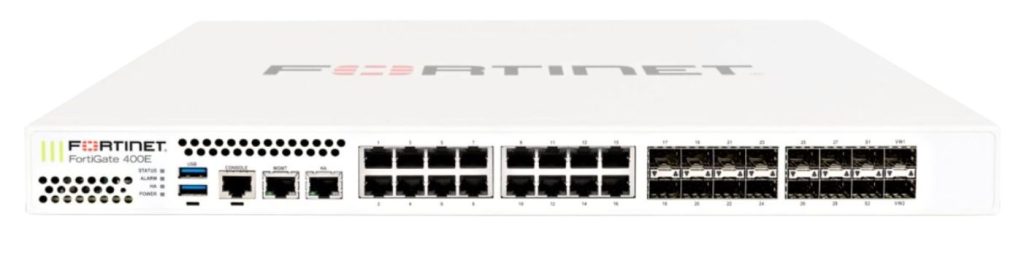
Other notable features include the Fortinet Security Fabric, secure SD-WAN, and network segmentation. The FortiGate 400E is a great option for a mix of unified and scalable protection.
SonicWall vs Fortinet Firewall Comparison
In reality, a lot of what’s said between these two security vendors overlaps. Meaning, you can’t really go wrong with either side. Nevertheless, considering the fine print is the only way you can align the specs with your exact network demands. Take a look at the table below for a comprehensive overview of the NSa 5800 and FortiGate 400E.
| Specifications | SonicWall NSa 5800 | FortiGate 400E |
|---|---|---|
| Firewall Throughput (Gbps) | 30 | 32 |
| IPS Throughput (Gbps) | 24 | 7.8 |
| IPSec VPN Throughput (Gbps) | 21 | 20 |
| Threat Prevention / Protection Throughput (Gbps) | 24 | 5 |
| VPN Tunnels | 6,000 | 2,000 |
| Max Connections / Concurrent Sessions | 8,000,000 | 4,000,000 |
| User Capacity | 2,500 to 5,000 | 300 to 500 |
| Interface | 24 x 1GbE Cu 8 x 10G SFP+ 1 console (RJ45 to DB9) 2 USB (USB type-A) | 16 x RJ45 Interfaces 16 x GE SFP Slots 2 x GE RJ45 Management Ports 2 x USB Ports 1 x RJ45 Console Port |
An important thing to remember when it comes to choosing the right firewall is that bigger isn’t always the better option. It’s always about the best possible alignment with your true network demands and future business goals.
The Final Word
At the end of the day, when it comes to SonicWall vs Fortinet, both the NSa 5800 and FortiGate 400E are enterprise-grade options. Whereas the 5800 is built for high-capacity networks, FortiGate firewalls lean into AI-driven security and support for hybrid environments.
Once again, it isn’t about which is better, but focusing on the key differences that are best aligned for your operation. As always, you can always speak with our team at Firewalls.com for more guidance on which route your business network should take.
FAQ
What’s the Main Difference Between the SonicWall NSa 5800 and FortiGate 400E?
The NSa 5800 is aimed at high-capacity networks with massive connection support. With the 400E, you’re getting a focus on AI-driven security and hybrid network flexibility.
Which Firewall is Better for Large User Environments?
SonicWall NSa 5800 supports up to 5,000 users, making it ideal for networks with high traffic demands. The FortiGate 400E is better suited for smaller to mid-sized deployments needing enterprise-grade security.
How Do Their VPN Capabilities Compare?
The NSa 5800 supports 6,000 site-to-site VPN tunnels, while the FortiGate 400E handles 2,000 gateway-to-gateway VPNs.
Which Firewall Offers Higher IPS and Threat Protection Throughput?
The FortiGate 400E delivers 7.8 Gbps IPS and 5 Gbps threat protection, and the NSA 5800 promises 24 Gbps for IPS and threat prevention throughput.
Can Either Firewall Handle Hybrid Network Setups?
Although the FortiGate 400E is optimized with hybrid network demands in mind, both firewalls can handle the various needs behind hybrid network setups.