The Sophos XGS series includes 10+ firewall models, focusing on the varying network demands of small to large-scale enterprises. While it may not be too difficult to find the hardware, making the right choice is a whole different discussion on its own.
Small offices and enterprise networks come with differing network requirements that go beyond simple throughput capabilities. This article highlights nine Sophos firewalls that’ll help narrow down a broad selection of hardware down into easily digestible categories.
Key Takeaways:
- Compare nine Sophos XGS firewalls across small business, mid-range, and enterprise tiers
- Choose desktop models for smaller networks and rackmount options for larger deployments
- Consider the reality of your current and future network demands
- Evaluate IPS, threat protection, and SSL/TLS inspection alongside firewall throughput
- Match firewall capacity, port options, and expansion potential to your business’s long-term goals
Table of Contents
9 Sophos XGS Firewall Models for Businesses at Every Stage
Sophos firewall models have always covered the security needs of business operations of all sizes. However, I always like to remind owners and IT professionals that doesn’t mean every model can conform to your specific demands.
There’s a reason tiers for small, mid-range, and enterprise-level companies exist here. Small businesses tend to lean on compact desktop designs, whereas mid-range and enterprise models tend to require 1U or 2U rackmount hardware. Nonetheless, understanding your options and real-world network demands is how you land on the right firewall model.

Small Business Sophos XGS Firewalls
For those looking into the small business tier of Sophos firewalls, you have plenty of great options in front of you. Perfect for the likes of retail stores, small offices, and even branch locations, they bring a lot more to the table than you might expect.
1. Sophos XGS 88
The epitome of entry-level, the XGS 88 is a go-to starter option for many businesses. I’m personally a pretty big fan of the fanless desktop design. Moreover, its practicality doesn’t mean it’s short on flexibility.
Check out the brief specs list for the XGS 88 below:
- Firewall Throughput: 9.9 Gbps
- IPS Throughput: 2 Gbps
- Threat Protection Throughput: 2 Gbps
- Xstream SSL/TLS Inspection: 60- Mbps
- Max Concurrent Connections: 1.6 million
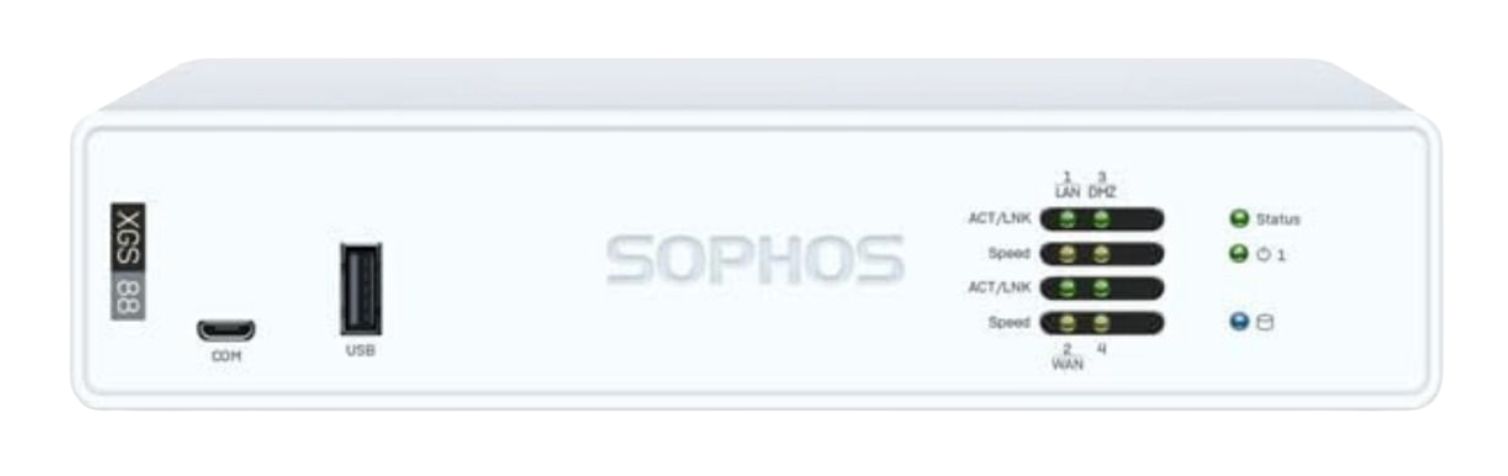
For newer operations, this is definitely more than enough for most, but that can change once you start to see more of a growth trajectory. When it’s time for an upgrade, you have the XGS 118 waiting next in line.
2. Sophos XGS 118
I’m still in the realm of desktop designs here, but the XGS 118 packs a little more of a punch across several spec categories. You’re getting more built-in network connectivity. In addition to that, you even get support for an optional second-gen 5G module for those who need cellular WAN redundancy.
Here are a few comparable specs to consider:
- Firewall Throughput: 15.5 Gbps
- IPS Throughput: 3.5 Gbps
- Threat Protection Throughput: 3.25 Gbps
- Xstream SSL/TLS Inspection: 1.1 Gbps
- Max Concurrent Connections: 5.5 million

For operations juggling multiple devices across the network and also needing room to grow, the XGS 118 could easily be a great starting point as well. It always comes down to your real-world needs in the moment, mixed with what your long-term strategy looks like.
3. Sophos XGS 138
Out of the three small business Sophos firewalls on this list, the XGS 138 is a standout model. More specifically, I’d say this model leans more toward the small to mid-range crowd.
If you know anything about firewall hardware, you can see that for yourself in the specs below:
- Firewall Throughput: 19.1 Gbps
- IPS Throughput: 5.85 Gbps
- Threat Protection Throughput: 4.75 Gbps
- Xstream SSL/TLS Inspection: 1.7 Gbps
- Max Concurrent Connections: 6.55 million

For the newbies, I’d also like to note that these throughput figures measure different capabilities. It may be obvious to some, but don’t forget that firewall throughput represents general firewall processing. With things like IPS and threat protection throughput, they reflect aspects like performance and additional security inspection.
Sophos XGS Mid Range Firewall Solutions
Moving a step up in the XGS lineup, the mid-range tier includes models such as the XGS 2100, 2300, and 3300. The 1U rackmount design in this tier is more than fitting for server rooms or dedicated IT equipment spaces. Overall, you have plenty to work with between entry-level and high-performance options.
4. Sophos XGS 2100
The XGS 2100 from Sophos is considered the entry-level model from their mid-tier options. It’s a core transition point for many coming from the small-business tier, with plenty of upgrades to look forward to.
Here’s what that looks like when you get into the fine print:
- Firewall Throughput: 30 Gbps
- IPS Throughput: 6 Gbps
- Threat Protection Throughput: 5 Gbps
- Xstream SSL/TLS Inspection: 1.1 Gbps
- Max Concurrent Connections: 6.5 million
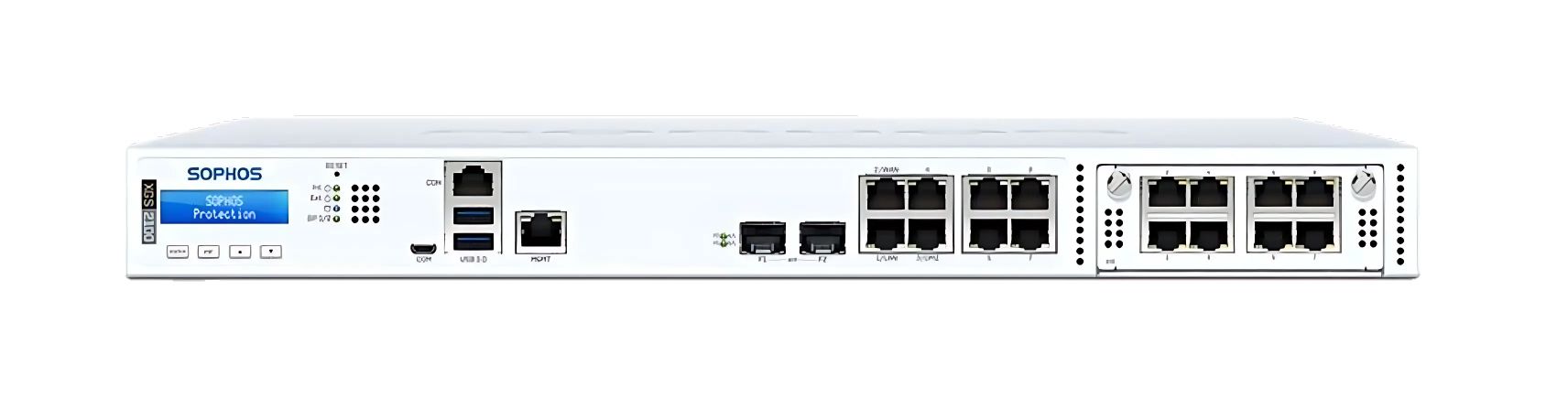
This also includes a FleXi Port slot for additional copper, fiber, bypass, or PoE connectivity. Highly adaptable and built for years of support, the XGS 2100 is more than reliable, to say the least.
5. Sophos XGS 2300
Another 1U rackmount firewall, the Sophos XGS 2300 is a mid-market firewall servicing business networks with heavier inspection demands. You’re working with higher throughput compared to the 2100, with the same Sophos architecture you can rely on.
- Firewall Throughput: 39 Gbps
- IPS Throughput: 7 Gbps
- Threat Protection Throughput: 5.5 Gbps
- Xstream SSL/TLS Inspection: 1.45 Gbps
- Max Concurrent Connections: 6.5 million

Technically, any of the Sophos firewalls are a good starting point; it just comes down to where your business is in the moment. I look at the XGS 2300 as a go-to middle ground for mid-sized, yet scaling business networks.
6. Sophos XGS 3300
As you might expect, you’re dealing with a bit of improved performance when it comes to the Sophos XGS 3300. Now I’m starting to get into a space that’s meant for more demanding workloads.
See for yourself in the brief specs list below:
- Firewall Throughput: 58 Gbps
- IPS Throughput: 14 Gbps
- Threat Protection Throughput: 10 Gbps
- Xstream SSL/TLS Inspection: 3.13 Gbps
- Max Concurrent Connections: 13.7 million

Another point I’d like to highlight is that throughput specs aren’t the end of the line when it comes to your final decision. Not only are there many other figures to consider, but the actual built-in security features are an entirely different focus area.
The good news is that these firewalls pretty much share the same architecture through and through. What you’re looking for are the limits in each one, and comparing that against the demands of your network.
Sophos XGS Enterprise Firewalls
This category is aimed at larger organizations that not only need significant security support, but also room to grow as well. Now you’re getting into the 2U rackmount space, as these firewalls are built for the likes of campus networks and data-center environments.
7. Sophos XGS 4300
If you’re working with a large space, high device count, or simply need room to grow, Sophos XGS firewalls are an excellent idea. More specifically, the XGS 4300 comes with a lot of the same architecture, outside of differences in specs and interface details.
Give the fine print a quick look in the list below:
- Firewall Throughput: 75 Gbps
- IPS Throughput: 29.5 Gbps
- Threat Protection Throughput: 25.2 Gbps
- Xstream SSL/TLS Inspection: 8 Gbps
- Max Concurrent Connections: 16.6 million

Don’t get me wrong, this is quite sizable for many companies out there. In the same vein, it may not cut it depending on the true needs of your enterprise. That’s where a lot of business owners jump a step up to the XGS 4500.
8. Sophos XGS 4500
This is a solid middle ground within the enterprise part of the XGS lineup. For the right company, the XGS 4500 delivers robust security without biting off more than you actually need.
Check out what that looks like when it comes to the numbers:
- Firewall Throughput: 80 Gbps
- IPS Throughput: 36.5 Gbps
- Threat Protection Throughput: 31.85 Gbps
- Xstream SSL/TLS Inspection: 10.6 Gbps
- Max Concurrent Connections: 17.2 million

It’s easy to look at these numbers and think that’s more than you’ll ever need. In reality, this is true for some, but not for everyone. Also take into account that firewall models rotate out every 3-5 years, and making the right decision ends up being pretty important. I’m going to highlight one more model here; a worthy consideration for those who haven’t really seen what works for them just yet.
9. Sophos XGS 5500
High-performance is a good way to describe the XGS 5500 if you ask me. The short version is that you’re getting that unique Sophos architecture, with an impressive jump in the specifications.
Below is a quick look at those numbers:
- Firewall Throughput: 100 Gbps
- IPS Throughput: 40 Gbps
- Threat Protection Throughput: 46 Gbps
- Xstream SSL/TLS Inspection: 13.5 Gbps
- Max Concurrent Connections: 32.4 million
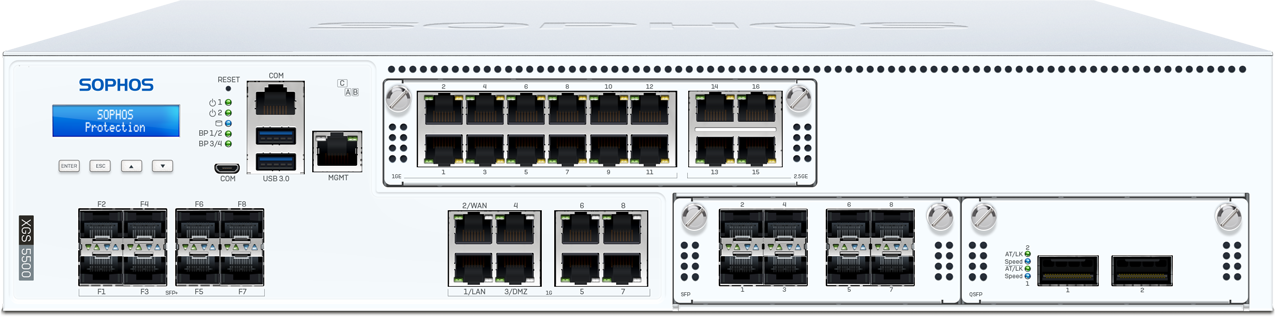
Impressive, to say the least, the XGS 5500 is a serious piece of security hardware. Then again, don’t forget who this is built for, as its capabilities are meant for much larger, established networks.
How to Choose the Right Sophos XGS Firewall for Your Business
Making the right choice here is actually pretty simple. All you need to do is match the firewall capacity to things like business size, network demands, and overall security requirements. For starters, use this firewall comparison table below as a quick guide to finding the right model.
| Firewall Model | Firewall Throughput | IPS Throughput | Threat Protection Throughput | Xstream SSL/TLS Inspection | Max Concurrent Connections |
|---|---|---|---|---|---|
| XGS 88 | 9.9 Gbps | 2 Gbps | 2 Gbps | 600 Mbps | 1.6 million |
| XGS 118 | 15.5 Gbps | 3.5 Gbps | 3.25 Gbps | 1.1 Gbps | 5.5 million |
| XGS 138 | 19.1 Gbps | 5.85 Gbps | 4.75 Gbps | 1.7 Gbps | 6.55 million |
| XGS 2100 | 30 Gbps | 6 Gbps | 5 Gbps | 1.1 Gbps | 6.5 million |
| XGS 2300 | 39 Gbps | 7 Gbps | 5.5 Gbps | 1.45 Gbps | 6.5 million |
| XGS 3300 | 58 Gbps | 14 Gbps | 10 Gbps | 3.13 Gbps | 13.7 million |
| XGS 4300 | 75 Gbps | 29.5 Gbps | 25.2 Gbps | 8 Gbps | 16.6 million |
| XGS 4500 | 80 Gbps | 36.5 Gbps | 31.85 Gbps | 10.6 Gbps | 17.2 million |
| XGS 5500 | 100 Gbps | 40 Gbps | 46 Gbps | 13.5 Gbps | 32.4 million |
Sure, there’s more than just the specs alone to consider, but they help paint the picture. As with any firewall lineup, scaling up like this is pretty normal. However, it’s the architecture and security features that really set them apart from each other.
Let’s Wrap This Up
First and foremost, always match your network demands with the right Sophos XGS firewall specifications. This article covers all three core business tiers. Whether you’re a new operation, mid-range and scaling, or established enterprise, Sophos has a firewall with your name on it.
If this all feels like a bit much to navigate, that’s what our expert network engineers are for at Firewalls.com. Hardware aside, we’re here to give you hands-on support and expertise to help make the decision-making process as simple as it should be.
Frequently Asked Questions
Which Sophos XGS Firewall is Best for a Small Business?
The Sophos XGS 88, 118, and 138 are desktop options meant for the needs of small and growing businesses.
What is the Difference Between Sophos XGS Desktop and Rackmount Firewalls?
This simply has a lot to do with the size of the hardware, as models like the XGS 88 are desktop designs, while the 5500 is larger and needs rackmount support.
Which Sophos XGS Firewall Supports the Highest Throughput?
In this list, the XGS firewall with the highest throughput is the 5500 model, featuring up to 100 Gbps of firewall throughput.
Why Should I Compare IPS and Threat Protection Throughput?
These figures indicate performance under different security workloads, such as how well a firewall might handle traffic inspection beyond firewall processing.
How do I Choose a Sophos XGS Firewall That Can Scale With My Business?
Evaluate current traffic, expected growth, concurrent connections, security inspection requirements, and port expansion options.