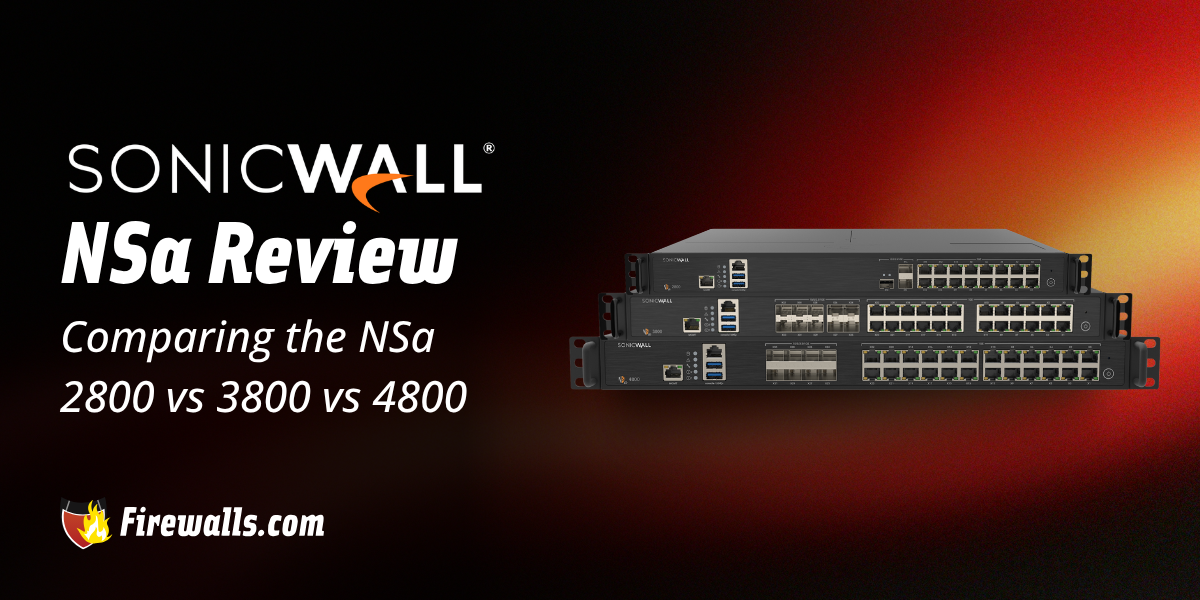
With any SonicWall NSa review, I have to lean into their Gen 8 lineup. This isn’t solely because it’s the most current, but also due to the growth path they offer companies of all sizes.
Differences aside, SonicWall Gen 8 firewalls support advanced threat prevention, encrypted traffic inspection, centralized management, and the list goes on. This article focuses on what makes each of these models unique, and what you need to know to get aligned with the right model.
Key Takeaways:
- The NSa 2800 suits growing companies needing enterprise-level firewall protection
- The NSa 3800 is best for mid-tier enterprises with demanding networks and a need for higher capacity
- Your network benefits from up to 20 Gbps firewall throughput with the NSa 4800
- All three support threat prevention, encrypted traffic inspection, centralized management, and more
- It’s crucial to compare throughput, connection limits, and interface details outside of the surface-level throughput specs
Table of Contents
What Sets These SonicWall Firewall Models Apart?
Between the NSa 2800, 3800, and 4800, it’s safe to assume that they focus on their own niche business environments and security capabilities. A few of the key decision makers on your side include your existing infrastructure, IT demands, and overall network protection needs.
While SonicWall firewalls can definitely handle today’s threats, they shouldn’t be seen as the end of the line of your security strategy. The hardware is also built to easily integrate with the other SonicWall hardware, like network switches and access points. Nevertheless, knowing which firewall to start with or upgrade to requires a firewall comparison that gets to the point on what matters most.

A Breakdown of the SonicWall NSa 2800
I always say with confidence that the NSa 2800 is an impressive step up from the 2700 from SonicWall. Not to put it down by any means, but the manufacturer has definitely put some thought into the upgrades.
Here’s a quick look at what you’re getting out of the NSa 2800:
- Firewall Throughput: 8 Gbps
- Threat Prevention Throughput: 3.5 Gbps
- App Inspection Throughput: 7 Gbps
- IPS Throughput: 7 Gbps
- Max Connections (SPI): 2 million

Security capabilities are great, but what really draws me in about Gen 8 is their stance on centralized management. This is a piece of hardware that can keep your network secure, simplify admin, and easily blend in with many other network security solutions.
What is the SonicWall NSa 3800?
As many of you might expect with the NSa 3800, you’re getting a bit of a jump in performance here. That being said, this also means it targets a slightly different specific use case.
For the most part, a lot of that can be seen in the specs:
- Firewall Throughput: 12 Gbps
- Threat Prevention Throughput: 8 Gbps
- App Inspection Throughput: 9 Gbps
- IPS Throughput: 8 Gbps
- Max Connections (SPI): 3 million
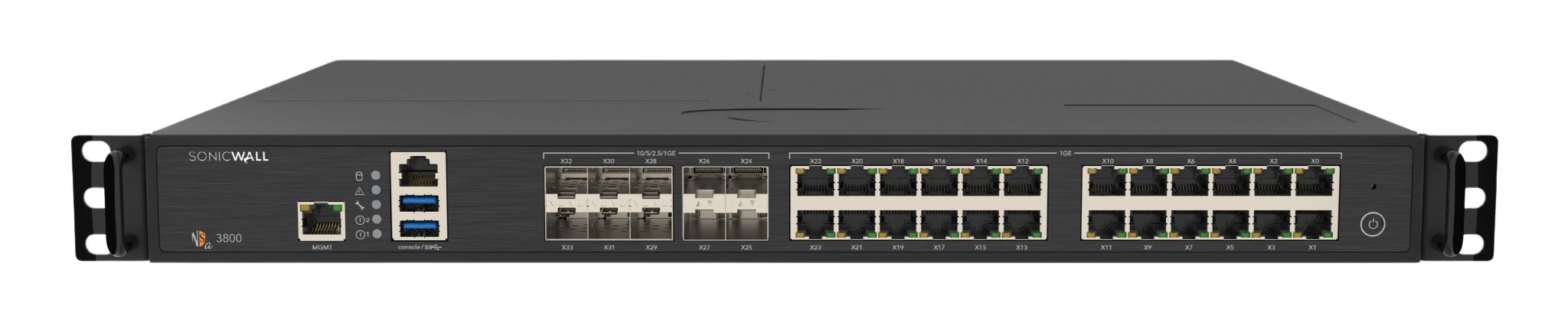
I can tell you based on these numbers alone that this firewall is best for mid-tier enterprises. Networks with growing traffic or remote access demands, for example. As great as the 3800 is on its own, the spec limits on this one still won’t cut it for some organizations out there.
What is the 4800 SonicWall Network Security Appliance?
Built for the needs of larger enterprises, the SonicWall NSa 4800 is an excellent choice for demanding network environments. Think campus networks or a sizable corporate headquarters.
Check out the specs on the NSa 4800 below for a quick reference point:
- Firewall Throughput: 20 Gbps
- Threat Prevention Throughput: 13 Gbps
- App Inspection Throughput: 13 Gbps
- IPS Throughput: 13 Gbps
- Max Connections (SPI): 6 million

I’d also like to note that this model is great for those transitioning into a distributed network environment or those who have always dealt with a hybrid or remote workforce. Rest easy knowing there are years of support ahead for this model, and the many others in the Gen 8 lineup. When the time comes, other SonicWall models will eventually hit the market, making sure your upgrade path never runs into a roadblock.

SonicWall NSa 2800 vs 3800 vs 4800 Firewall Comparison
In any reliable SonicWall NSa review, you’ll want to compare the details that tend to differ most. As far as security architecture and features go, these SonicWall models can look pretty similar.
Once you get down to the individual specs, you’ll start to see where they set themselves apart. For an easy firewall comparison, give the table below a quick look to see the core differences between the NSa 2800 vs 3800 vs 4800.
| Specification | NSa 2800 | NSa 3800 | NSa 4800 |
|---|---|---|---|
| Firewall Throughput | 8 Gbps | 12 Gbps | 20 Gbps |
| Threat Prevention Throughput | 6 Gbps | 8 Gbps | 13 Gbps |
| App Inspection Throughput | 7 Gbps | 9 Gbps | 13 Gbps |
| IPS Throughput | 7 Gbps | 8 Gbps | 13 Gbps |
| TLS/SSL Inspection Throughput | 1.8 Gbps | 3 Gbps | 4.2 Gbps |
| IPSec VPN Throughput | 5.5 Gbps | 8 Gbps | 11 Gbps |
| Max Connections (SPI) | 2 million | 3 million | 6 million |
| Connections per Second | 50,000 | 90,000 | 140,000 |
| Storage | 128 GB | 256 GB | 256 GB |
| Interfaces | 16 x 1GbE 3 x 10G SFP+ 2 x USB 3.0 1 x Console 1 x Mgmt. port | 24 x 1GbE 10 x 10G SFP+ 2 x USB 3.0 1 x Console 1 x Mgmt. port | 24 x 1GbE 8 x 10G SFP+ 1 x console (RJ45 to DB9) 2 x USB |
From my long-term experience with SonicWall hardware, you don’t have to sweat it too much when it comes to making the right choice. Even if you aim a little higher than what you actually need right now, that simply means you have space you can grow into.
Consider how cyber threats have evolved in recent years, especially with the help of AI; next-gen firewalls are a must-have. SonicWall hardware has been on the market for a long time, and the Gen 8 models are a reflection of their experience in the industry. They cover far beyond the basics in network security and make it easy for modern businesses to adapt without overhauling their entire infrastructure.
A Final Word
While this SonicWall NSa review focuses on three primary models, these aren’t your only options from the series. The NSa 2800 is great for newly growing businesses, while the 3800 and 4800 are geared more toward mid-to-large-scale enterprises.
As I said before, comparing the specs isn’t the whole of your decision-making, but they’re a guiding light on which direction you should look. In any case, our team at Firewalls.com is here if you’d simply like some one-on-one expert insight. From hardware decisions to long-term security strategy and backend support, we have you covered.
Frequently Asked Questions
What is the Main Difference Between the SonicWall NSa 2800 vs 3800 vs 4800?
The core difference between these three SonicWall models is throughput, connection capacity, and interface details.
Which SonicWall NSa Firewall is Best for a Mid-Sized Business?
The NSa 2800 or 3800 can be suitable here, depending on your real-world network traffic, security requirements, and expected growth. Keep in mind that businesses with heavier workloads should lean more toward the 3800 in this case.
How Much Firewall Throughput Does the SonicWall NSa 4800 Support?
With the NSa 4800, you’re getting up to 20 Gbps of firewall inspection throughput and 13 Gbps of threat prevention throughput.
Does the SonicWall NSa Gen 8 Firewall Support Encrypted Traffic Inspection?
Yes, all three models support TLS/SSL inspection and decryption to help identify threats hidden in encrypted network traffic.
Can SonicWall NSa Firewalls Integrate With Other SonicWall Products?
Yes, they support centralized management through SonicWall Network Security Manager (NSM) and can integrate with compatible SonicWall switches, wireless access points, and other modern security solutions.