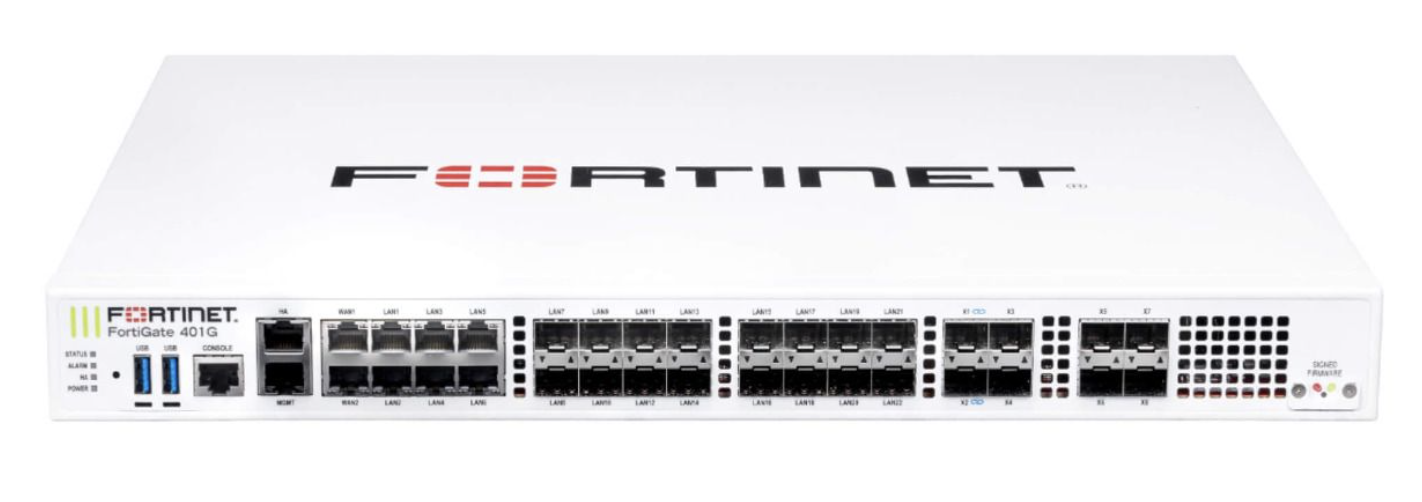
For those digging through Fortinet reviews, I have to say it’s pretty important not to overlook the 400G model. I’d also like to note that this model falls very closely in line with the 401G, and you can learn about the core difference between the two in the FAQS at the end of this write-up.
Built for the needs of growing enterprise organizations, the 164 Gbps in firewall throughput tends to turn some heads on its own. This also comes with features like VPN performance, security inspection, and seamless network management, to name a few. Learn about the ins and outs about this firewall hardware and see how it aligns with your long-term goals for your business network.
Key Takeaways:
- The FortiGate 400G/401G delivers up to 164 Gbps of firewall throughput for high-demand enterprise networks
- Security performance varies by workload, with 13 Gbps of threat protection throughput when advanced inspection is enabled
- FortiGuard AI/ML services, secure SD-WAN, and network segmentation support a layered security strategy
- High session capacity and multiple VPN options help accommodate large networks and remote workforces
- Compare real-world traffic demands, interface compatibility, and long-term growth plans before making a final decision
Table of Contents
400G/401G Fortinet Review and How It Stands Out
What I like to focus on before all of the fine print is what this Fortinet hardware firewall really stands for. All in all, you’re working with an integrated security approach, focusing on the networking demands of larger organizations.
Let me offer you a streamlined understanding of the FortiGate 400G:
- Provides threat intelligence and AI/ML-powered security services
- Includes SD-WAN and supports security policy enforcement across distributed locations
- You can enable additional inspection services, which can have a positive effect on real-world workloads
- Utilize network segmentation so admins can easily control traffic between network zones
At the end of the day, it’s important you make sure you evaluate your options based on real-world performance. This means understanding the actual traffic, encryption, peak usage, app demands, and more.
Key Advantages of the 400G Firewall Protection
It’s hard not to be impressed by what Fortinet firewalls bring to the scope of modern business network security. Moreover, with the 400G, you’re getting an immense level of support on multiple fronts.
Below is a brief list of several highlights from the firewall’s specs:
- Firewall Throughput: 164 Gbps
- IPSec VPN Throughput: 55 Gbps
- IPS Throughput: 25 Gbps
- NGFW Throughput: 14 Gbps
- Concurrent Sessions: 28 million
It goes a lot deeper than this, of course, with other notable features like flexible connectivity for integrating switches, servers, and other security hardware. While I’ve mentioned plenty about how this Fortinet hardware firewall is great for enterprise operations, what does that mean exactly?
Who is This Fortinet Hardware Firewall Designed For?
I can agree that enterprise businesses cover a very broad spectrum of operations. To hone in on this with more detail, I’m talking about large companies handling substantial network traffic.
This also includes the nuances of many connected devices that need reliable processing capacity. If you ask me, I’d say this need is even more true when it comes to distributed, hybrid, or fully remote workforces.
Nevertheless, any growing business needs to have an expected roadmap for what their growth is going to look like. It’s this hindsight that will help you navigate the right FortiGate firewalls and determine whether the 400G is in your lane or not.

FortiGate 400G Specifications and Performance Overview
The reality about enterprise firewall performance is that it all heavily depends on more than just the throughput ratings. While these specs definitely matter, the FortiGate 400G is known for much more than this alone. I suggest taking a look at the table below for a broader look into what this Fortinet firewall is made of.
| Specification | Fortinet FortiGate 400G/401G |
|---|---|
| Firewall Throughput | 164 Gbps |
| IPSec VPN Throughput | 55 Gbps |
| IPS Throughput | 25 Gbps |
| NGFW Throughput | 14 Gbps |
| Threat Protection Throughput | 13 Gbps |
| Firewall Latency | 2.51 μs |
| Max Concurrent Sessions | 28 million |
| New Sessions per Second | 580,000 |
| SSL VPN Throughput | 6.1 Gbps |
| SSL Inspection Throughput | 11.5 Gbps |
| App Control Throughput | 50 Gbps |
| Firewall Policies | 30,000 |
| Concurrent SSL VPN Users | 5,000 |
| Local Storage | 400G: None 401G: 960 GB |
| Interfaces | 4 x 25GE SFP28 4 x 10GE SFP+ 16 x GE SFP 8 x 5GE RJ45 1 x 2.5GE RJ45 1 x GE RJ45 |
I can agree that Fortinet reviews are abundant, but it’s a lot easier to sort through the details if you know what you’re looking for. Part of being able to do that is having a core understanding of your own network demands.
This differs from one organization to the next, which is why you can’t copy and paste another organization’s strategy and expect it to work the same for you. While firewalls like the 400G are meant to serve a range of businesses, that scope narrows down when it comes to the fine print.
Enterprise Firewall Protection, VPNs and Security Features
Specifications aside, the 400G is equally known for its FortiGuard AI/ML-powered services. This is only one layer built to face evolving threats. Moreover, secure SD-WAN and network segmentation are a big part of supporting your security policies.
Modern companies should always match angles like inspection and VPN capabilities to their expected security requirements. This includes focus areas like expected traffic and remote connectivity needs, for example.
Is the FortiGate 400G the Right Firewall for Your Business?
From my standpoint, the fact that the FortiGate 400G caters to the needs of larger businesses can’t be argued with. It always comes down to the specifics between your network and what this firewall model brings to the table.
Consider these points when navigating your final decision on choosing the right hardware:
- Distributed enterprises benefit greatly from its connectivity options and support for numerous VPN connections
- Businesses dealing with high traffic volumes or demanding security requirements pair well with the 400G
- Always evaluate your real-world throughput and the security features you need for the long run
- Make sure to confirm that available interfaces match your existing switches, cabling, and any planned network expansion
You can always look at network security solutions from many different angles, but I’m here to focus on what’s definitive. If you were to ask me directly, I’d tell you to choose the Fortinet FortiGate 400G based on your actual security requirements.
Moreover, this should be taken with a grain of salt, as your security requirements can easily change with each passing year. The good news is that the 400G is more than equipped to offer years of support in addition to the flexibility you need to adapt the hardware to your growing network demands.

A Final Word
As far as Fortinet reviews go, I’d say this one equips you to make the right choice, whether or not the 400G is best for your network. I also want to take the chance to remind you that the FortiGate lineup has plenty of great firewalls available.
While the 400G is a go-to for many sizable networks, it’s simply one of several options for this particular target market. Overall, if you’d like a few more pointers from the experts, that’s what our team at Firewalls.com is here for. Whether it’s the 400G or another reliable security solution, we have covered on more than just the basics.
Frequently Asked Questions
What is the Firewall Throughput of the FortiGate 400G?
The FortiGate 400G delivers a listed firewall throughput of up to 164 Gbps.
How Much Threat Protection Throughput Does the FortiGate 400G Support?
With the FortiGate 400G, you’re getting support for up to 13 Gbps of threat protection throughput for inspecting network traffic.
How Many Concurrent Sessions Can the FortiGate 400G Handle?
It can manage up to 28 million concurrent sessions across active network connections.
Does the FortiGate 400G Support Site-to-Site and Remote Access VPNs?
Yes, the firewall supports gateway-to-gateway and client-to-gateway IPSec VPN tunnels, as well as SSL VPN connectivity.
What is the Difference Between the FortiGate 400G and 401G?
The 400G and 401G from Fortinet share the same listed throughput, VPN, session capacity, interface configuration, and expansion specs. However, the 401G includes 960 GB of local storage for deployments that require onboard storage.