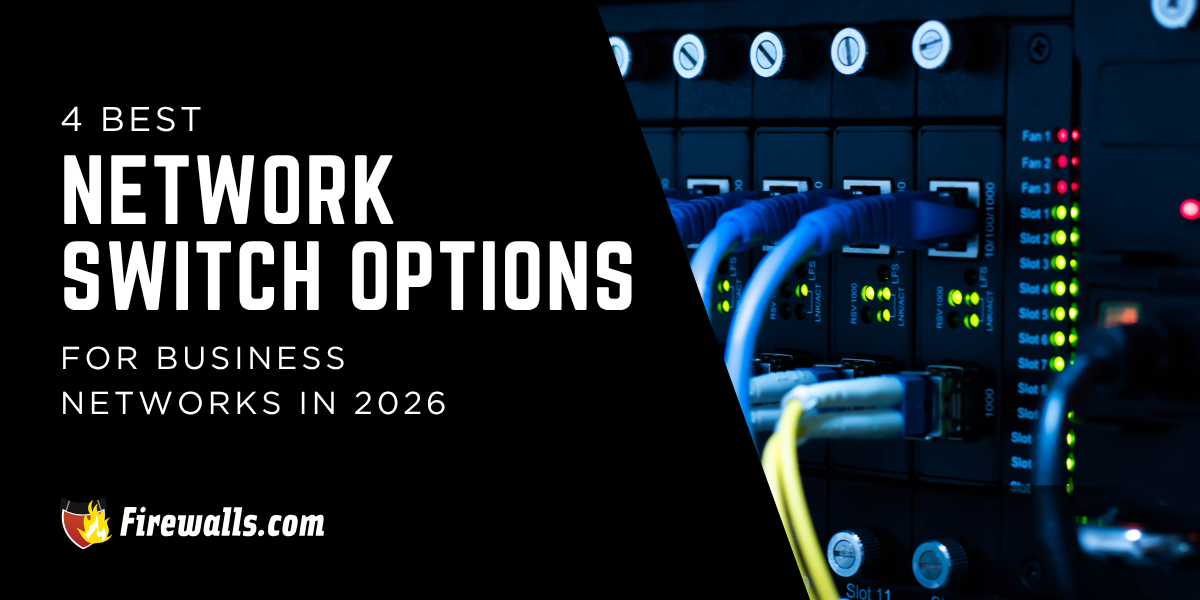
Aside from the much-needed next-gen firewall solutions, it’s also highly advantageous for businesses to look into the best network switch for their operation. This layer of your security stack is a core component to your connectivity, performance, and scalability throughout your network.
However, this security hardware requires the same due diligence when it comes to the fine print of what it’s capable of, just like your firewall. This article focuses on 4 of the best network switch options that offer range, alongside the factors businesses should consider for the best possible alignment.
Main Takeaways:
- The best network switch depends on scalability, performance, and infrastructure factors
- Fortinet, SonicWall, Cisco Meraki, and Sophos offer a range of unique switching solutions for companies of all sizes
- Managed switches improve your network visibility, security, and control
- PoE support helps power essential devices on your network without needing the extra infrastructure
- Firewall integration simplifies network management and security operations
4 Best Network Switch Options for Your Business
In a similar fashion to any other type of network security hardware, finding the best network switch depends on several key factors. A few leading examples here include your infrastructure, management preferences, and performance requirements.
When it comes to more specific details about a high-speed network switch, you want to look into cloud management, firewall integration, PoE support, and scalability angles. To help you get to the point in your search, every model below lists important comparable specs, offering a range for businesses in different growth stages.
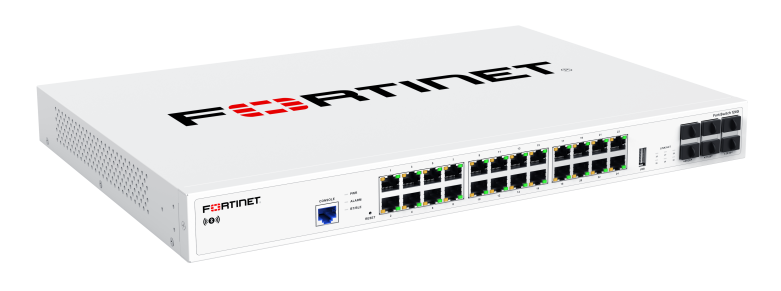
1. Fortinet FortiSwitch 124G
If you’re a growing business, the 124G from Fortinet is one of the best networking switches you could set your sights on. It integrates easily into the Fortinet ecosystem and does well to further simplify network management as a whole.
Key Features:
- Features six 10G SFP+/SFP uplink interfaces
- Promises 240 Gbps switching capacity
- Includes 24 multi-gigabit Ethernet ports
- Supports standalone or FortiLink-managed deployments
- Fanless rack-mount design for data-only environments
Why It Stands Out
For those already making use of Fortinet’s security fabric, the FortiSwitch 124G is a great addition to the team. The simple administration is a huge selling point for me; it’s the seamless integration with scalable support.
Another important takeaway about this recommended network switch is the fact that it works perfectly fine even if you aren’t using other Fortinet products. Whether you’re starting from scratch or adding to your security stack, the 124G is a reliable option.
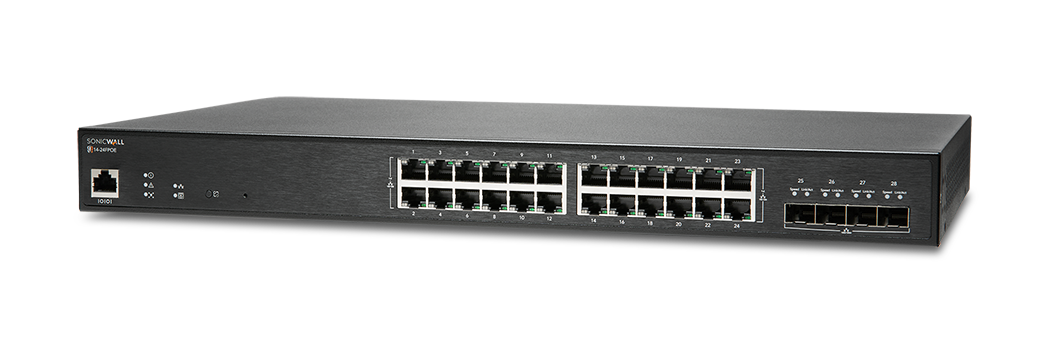
2. SonicWall SWS14-24FPOE
This is a leading manufacturer that knows a thing or two about creating an ecosystem around the network security items businesses need. Moreover, the SWS14-24FPOE can stand up to the likes of enterprise switches, even if its focus is on small to mid-market operations.
Key Features:
- 802.1X authentication
- Supports IP and MAC access lists
- Includes 24 Gigabit Ethernet ports and four SFP+ uplinks
- Delivers 410W of PoE for connected devices
- Supports VLANs and QoS
Why It Stands Out
In addition to easy integration with SonicWall firewalls, you get secure network segmentation through granular access controls. Moreover, the switch easily powers devices like access points, IP phones, and other PoE-powered devices.
One detail you should take with you on your search is that this network switch is best suited for distributed networks and SD-Branch deployments. Overall, the SWS14-24 network switch from SonicWall gives you the scalable wired connectivity you need to grow without the network bottlenecks.
3. Cisco Meraki MS130-48 Cloud Managed Network Switch
I can’t talk about network switches without bringing a cloud-first option to the table. The MS130-48 from Cisco Meraki is a great option for multi-site organizations. In addition to that, you’re getting the centralized admin, simplified remote support and switching capability that your business needs.
Key Features:
- Features 48 Gigabit Ethernet ports and four SFP uplinks
- Offers SNMP, Syslog, and 802.1X authentication
- Promises 104 Gbps switching capacity
- Includes ACLs, VLANs, and DHCP snooping
- Cloud-based configuration and monitoring

Why It Stands Out
This cloud-focused network switch stands out as it helps simplify remote admin across multiple offices and branch locations. Considering many businesses are dealing with hybrid environments and multiple locations, switches like the MS130-48 are a good way to go.
It’s also great for reducing IT workload through automated updates as well as cloud monitoring. I can’t deny its place in distributed enterprise environments because it definitely fits the bill for many modern organizations.
4. Sophos CS110-24 Network Switch
Made for the likes of small businesses, retail, and branch offices, the CS110-24 from Sophos comes with flexible management and easy integration. Moreover, this particular model combines security with enterprise switching with the aim of supporting scaling businesses.
Key Features:
- Comes with 128 Gbps switching capacity
- Includes four 10G SFP+ uplinks
- Features 24 Gigabit Ethernet ports
- 410W full PoE support with CS110-24FP version
- Supports CLI and SNMP administration

Why It Stands Out
Featuring Active Threat Response through Sophos Central and easy management locally or through Sophos Central, this switch is a great addition to an existing Sophos setup. However, other Sophos products aren’t a requirement to get the switch support you need from this model.
You’re working with a flexible deployment, on top of full PoE across all ports. Through multiple management interfaces and switch stacking capabilities, this is a strong option to consider.

Comparing Some of the Best Network Switches on the Market
At the end of the day, finding the best network switch can come with a lot of specifications to sort through. I always find it important to have a main reference point to work with, and the table below should make your decision-making a lot easier for you and your team.
| Features | FortiSwitch 124G | SonicWall SWS14-24FPOE | Cisco Meraki MS130-48 | Sophos CS110-24 |
|---|---|---|---|---|
| Ethernet Ports | 24 x Multi-Gig | 24 x 1GbE | 48 x 1GbE | 24 x 1GbE |
| Uplink Ports | 6 x 10G SFP+/SFP | 4 x SFP+ | 4 x 1G SFP | 4 x 10G SFP+ |
| Switching Capacity | 240 Gbps | 128 Gbps | 104 Gbps | 128 Gbps |
| PoE Support | No | 410W PoE | No | 410W Full PoE with CS110-24FP version |
| Features | FortiLink integration, centralized policy management | VLANs, QoS, 802.1X, IP/MAC ACLs | ACLs, VLANs, DHCP Snooping, 802.1X | Active Threat Response, CLI, SNMP |
If you’re finding it hard to hone in on what’s best for your network, you have to look at this from two different angles. One, what are your company’s real-world network demands, and what features and capabilities are a priority? Size these answers up against the specs, and you’ll end up finding what you’re looking for.
The Bottom Line
What I want businesses and IT teams to take with them is not only options for the best network switch but also how to find what’s right for them. From your infrastructure to management preferences and long-term growth plans, all these play a part in your network hardware.
Comparing specs definitely helps, but so does working alongside the experts who understand all of the ins and outs. Don’t hesitate to hop into a call with us at Firewalls.com for answers to your questions and everything you need for your company’s network security strategy.
Frequently Asked Questions
What is the Best Network Switch for a Growing Business?
Choosing the best network switch depends on your network demands, but options like those listed in this article give you multiple scalable options to choose from.
Should Companies Choose a Managed or Unmanaged Network Switch
Managed switches are typically better for businesses because they provide features like VLANs, traffic control, security policies, and centralized management.
Why is PoE Support Important in a Business Network Switch?
PoE allows switches to deliver both data connectivity and power to devices like access points, IP phones, and cameras without needing separate power sources.
How Does Firewall Integration Improve Network Switch Management?
Firewall integration gives your business the ability to manage switches and security policies from a centralized platform. This also helps to improve visibility, control, and overall network efficiency.
What Factors Should I Consider When Selecting a Network Switch?
Businesses should evaluate angles like port count, switching capacity, any PoE requirements, management options, security features, and compatibility with their existing infrastructure.