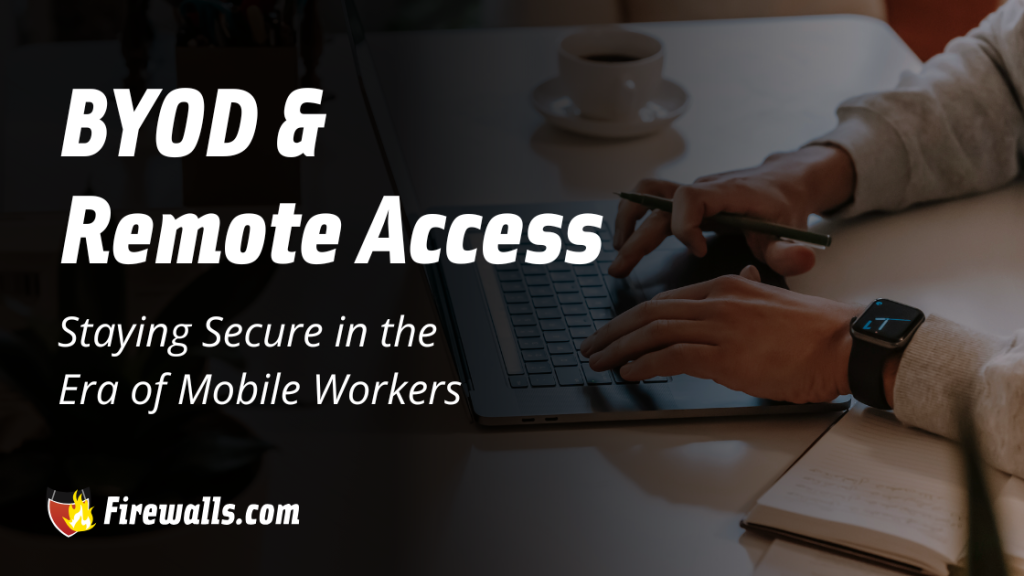
As Bring Your Own Device (BYOD) and Remote Access policies ramp up, so does the growing need to secure endpoints across business networks. While the idea of remote work environments isn’t brand new, it has been a major focal point in network security since 2020. With so many fresh attack surfaces, employers scramble to assemble additional security layers that prevent data leakage and intrusions.
The nature of BYOD proves challenging as these devices show volatility without proper VPN and next-gen firewalls to lock down security. This article focuses on the relationship between BYOD and remote access, and how businesses are staying secure in the era of a mobile workforce.
Looking Into Remote Cyber Security Solutions
The scope of remote work and mobile productivity has not only increased but has also become a preference among the modern workforce. While there are plenty of benefits to this, it can also lead to a broad range of network vulnerabilities.
Here are a few points that highlight both sides of the coin under this topic:
- An increased number of devices and endpoints raises the risk of unauthorized network access
- Secure mobile and remote access solutions can combat these new vulnerabilities with VPNs and next generation firewall solutions
- Weak security policies or misconfigured devices can easily add to the vulnerability issue
- Advanced controls like Zero Trust and user segmentation help to limit exposure
- Implementing and maintaining a healthy security posture in this environment requires ongoing management and workforce training
There’s no single perfect solution to eliminate potential threats in this new landscape. However, with the help of modern network firewall security and a layered defense strategy, businesses can mitigate risk with this new norm of BYOD.
Secure Remote Access
Remote IT security in this day and age considers tools like cloud-hosted VPNs, browser-based access, and robust endpoint security. There are many flexible options here as well, which have helped reduce IT overhead and the need to rely on software.
A leading example in secure remote access can be seen in what Sophos Central has to offer. This includes support for large-scale deployments with thousands of users, and protection against malicious apps, ransomware, spam, and the list goes on.
Of course, Sophos isn’t the only option in this space, as you could also go with SonicWall’s Global VPN Client for similar results, including client policy provisioning, multiple security measures with network-level access, and more.
Next-Generation Firewalls
Part of what’s great about next-generation firewalls (NGFWs) is their ability to deliver layered network support all on their own. Detecting advanced threats and enforcing granular security policies, they effectively identify suspicious behavior, block attacks, and offer a proactive response.
With some of the most modern options on the market, you can also get the benefit of AI-driven threat detection, intrusion prevention, and ransomware mitigation. Centralized management with NGFWs is easier than ever with a blend of options for on-prem and cloud environments.
User Segmentation
Aside from hardware or cloud-based security solutions, you can’t forget about user segmentation if you want the best secure remote access. While this also pertains to on-prem work environments, user segmentation is even more crucial in remote settings.
If you’re working with a BYOD work structure, then Role-Based Access Control (RBAC) is a must-have for your network. This assigns permissions based on specific user roles, limiting access to only the most necessary resources.
The end goal is to reduce potential exposure for the network and everyone else involved. However, you shouldn’t stop there, as zero trust principles and cloud security have taken the concept of user segmentation to new heights.
Zero Trust and Cloud Security
Following the principle of “never trust, always verify,” the Zero Trust security model eliminates the idea of implicit trust. This does well to heavily reduce the risk of insider threats, as well as credential-based attacks.
Tack on the benefit of continuous authentication and real-time device monitoring, and you have another layer of security added to your BYOD work environment. Other key implementations behind Zero Trust include multi-factor authentication, least-privilege access, and micro segmentation.
Creating a Future-Proof BYOD Work Environment
A future-proof BYOD strategy includes focal points like flexibility, productivity, and strong remote cyber security. With the likes of endpoint security and compliance checks, businesses can ensure only trusted devices have access to corporate networks. The likes of Zero Trust, cloud-managed security, and AI-driven network support have brought a lot of help to the table as well.
Here’s a quick checklist you can use to create a future-proof BYOD work environment:
- Establish clear BYOD security policies
- Implement device compliance checks to verify endpoint health
- Adopt Zero Trust security across all device connections
- Integrate cloud-based management to centralize control
- Continuously monitor your network and leverage analytics to evolve and adapt to new threats
It might feel like a new landscape to some organizations, but BYOD is also becoming an increasing norm all across the world. The best way to stay protected, facing the future of cyber threats, is with a stacked network security posture.
Final Thoughts
The concept of BYOD and remote access has evolved quite a bit in just a few years time. With a combination of proactive security strategies and layered network protection, BYOD can develop into a much safer environment.
Through continuous improvement, modern network tools, and employee training, true remote IT security won’t feel like such a far-fetched idea. If you’re dealing with a remote workforce, don’t wait to secure those endpoints and develop a strong, proactive security posture. Consider getting in touch with our team at Firewalls for the best secure remote access solutions so you can navigate BYOD stress-free for the long run.
FAQ
What are the Biggest Security Risks with BYOD Policies?
The primary risk with BYOD is unauthorized access, data leakage, and malware infections. For the most part, this is mainly caused by unsecured personal devices or specific insider threats.
How Can Businesses Secure Remote Access for Employees Working From Home?
This can be done in several ways, with cloud-hosted VPNs, NGFWs, and multi-factor authentication being a few leading solutions.
Why is Zero Trust Important for BYOD and Remote Environments?
The Zero Trust principle requires continuous authentication while reducing risks from insider threats or compromised credentials. Combined with least-privilege access and user segmentation, you can significantly reduce exposure to threats and lateral movement.
What Role Does User Segmentation Play in Securing a BYOD Network?
User segmentation is in place to limit network access based on specific roles and devices. Not only does this help prevent lateral movement, but it also helps to reduce the potential impact of a breach in the network.
How Can Organizations Future-Proof Their BYOD Strategies?
BYOD can remain a secure work policy with the help of modern tools like automation, proactive and adaptive security tools, and continuous monitoring and policy updates.