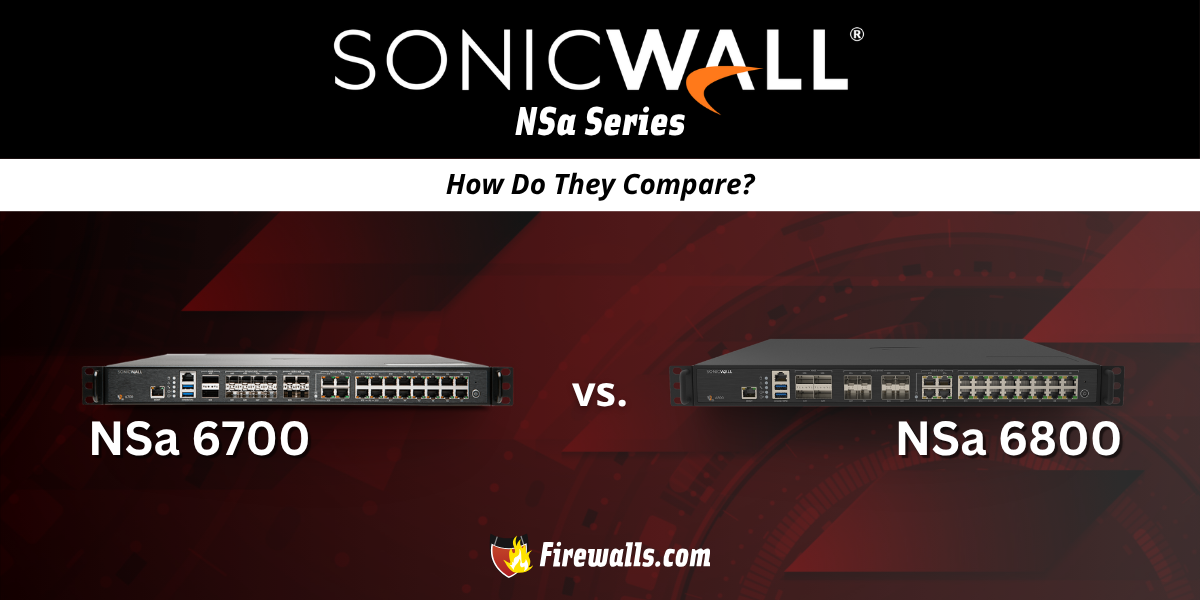
If you need an enterprise-grade firewall solution, SonicWall has quite a few options in their lineup. This is why hardware comparisons are important. Even though both firewalls are designed for businesses that need scalable, centralized security. Sizing up the NSA 6700 vs 6800 comes with quite a few differences, and this sentiment goes further than just surface-level specs.
Whether you’re a growing mid-market business or already an enterprise operation, both of these firewalls could fit the bill. This article lays out a quick comparison of how these firewalls differ from specs to features, operating systems, and more.
Key Takeaways:
- The SonicWall NSA 6700 is built for mid-to-large enterprise environments
- For the NSA 6800, you’re getting higher throughput, scalability, and capacity for more demanding workloads
- Both firewalls support centralized, enterprise-grade security, but are optimized for different levels of network growth
- The NSA 6800 is better suited for cloud-heavy, high-traffic, and encryption-intensive environments
- Proper firewall selection depends on long-term scaling needs, not just current network requirements
Choosing the Right NSA SonicWall Firewall
Selecting a firewall from the SonicWall NSA series starts with considering your long-term network growth. Current usage matters too, but if you’re going to pair up with firewall hardware for years, you’ll need a little hindsight.
Proper sizing helps you avoid unwanted performance bottlenecks, and it also reduces the need for an early hardware replacement. From your needs with encrypted traffic, compliance support, deployment architecture, and more, there’s plenty to consider here.

What is the SonicWall NSA 6700 Firewall?
The NSA 6700 is a SonicWall network security appliance that’s built for mid-range enterprise operations. You get the thorough security you need, without overly complex administration being in the mix.
Check out a few of the surface-level specs in the list below:
- Firewall Inspection Throughput: 36 Gbps
- Threat Prevention Throughput: 19 Gbps
- App Inspection Throughput: 20 Gbps
- IPS Throughput: 20 Gbps
- Anti-malware Inspection Throughput: 18.5 Gbps
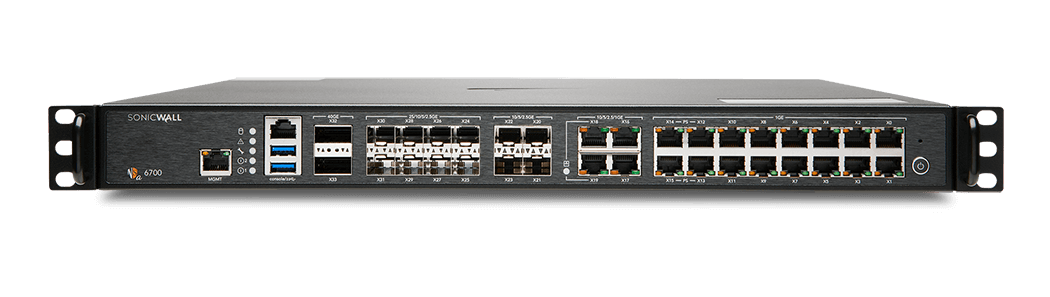
Keep in mind, this firewall is from their Gen 7 era, making it a bit older in the lineup compared to the 6800. Nevertheless, like other SonicWall firewall models, you also have multiple licensing tiers to choose from to support scalability.
What is the SonicWall NSA 6800 Firewall?
Looking at the SonicWall NSA 6800, this is a powerhouse for your network, supporting anywhere from 2,500 to 5,000 users at a time. Moreover, it’s an excellent choice for larger enterprise deployments and is optimized for app-heavy and cloud-driven networks.
Take a look at some of the comparable specs in the list below:
- Firewall Inspection Throughput: 55 Gbps
- Threat Prevention Throughput: 40 Gbps
- App Inspection Throughput: 40 Gbps
- IPS Throughput: 40 Gbps
- VPN Throughput: 27 Gbps

The Gen 8 architecture is optimized for multi-gigabit threat prevention, malware analysis, and strong TLS 1.3 inspection performance. You’re also getting advanced security services like DNS filtering, reputation-based CFS 5.0, intrusion prevention, VPN, app control, and more.
NSA 6700 vs 6800 Firewall Comparison
Thankfully, both of these firewalls still have quite a bit of time on the market. While you won’t have to worry about end-of-life anytime soon, it’s still important to consider the future needs of your network. The table below offers a side-by-side comparison of core details between the NSA 6700 and 6800 SonicWall products.
| Specifications | NSA 6700 | NSA 6800 |
|---|---|---|
| Firewall Inspection Throughput | 36 Gbps | 55 Gbps |
| Threat Prevention Throughput | 19 Gbps | 40 Gbps |
| App Inspection Throughput | 20 Gbps | 40 Gbps |
| IPS Throughput | 20 Gbps | 40 Gbps |
| VPN Throughput | 19 Gbps | 27 Gbps |
| Max Connections | 8,000,000 | 20,000,000 |
| New Connections per Second | 228,000 | 280,000 |
| Interfaces | 16 x 1GbE 10G/5G/2,5G/1G SFP+ ports 2 x USB 3.0 1 x Console port 1 x Management port | 16 x 1GbE 4 x 10/5/2.5/1 GbE ports 8 x 10/5/2,5/1G SFP ports 4 x 40G QSFP ports 2 x USB ports 1 x Console (micro-USB) 1 x Management port |
You can see the NSA 6800 comes out a bit stronger in a few areas, but that doesn’t mean it’s the automatic best choice. Nevertheless, you need to have a strong grasp of your long-term network security demands, and size that up against both firewalls.
The Final Word
This comparison between the SonicWall NSA 6700 vs 6800 is balanced between workload capabilities and your scalability requirements. Whereas the 6700 is positioned for mid-to-large environments, the NSA 6800 is built for higher traffic volumes, heavy encryption, and more demanding workloads.
Other factors, such as cloud adoption and remote access expansion, are also critical to your decision-making here. Your business is in good hands either way. However, it doesn’t hurt to have a chat with our experts at Firewalls.com to help point you towards the right piece of firewall hardware.
Frequently Asked Questions
What is the Main Difference Between the NSA 6700 and NSA 6800?
The 6700 is designed for mid-range to large-scale enterprise networks, and the 6800 kicks it up a notch by dealing with higher traffic, larger user bases, and more intensive workloads.
Is the NSA 6800 Always the Better Choice?
Not necessarily, as the 6800 offers higher performance, but the 6700 may be more accurate specs-wise and cost-effective for smaller organizations.
What Type of Businesses Should Use the NSA 6700?
Mid-market and growing enterprises that need strong security performance without extremely high traffic demands are a good fit for the NSA 6700.
Why Would a Company Choose the NSA 6800?
Organizations with heavy application usage, cloud dependency, and large-scale encrypted traffic tend to benefit more from the 6800’s higher throughput and capacity.
Do Both Firewalls Support Future Growth?
Yes, both NSA models are designed to scale with enterprise needs, but the 6800 provides more headroom for long-term expansion.