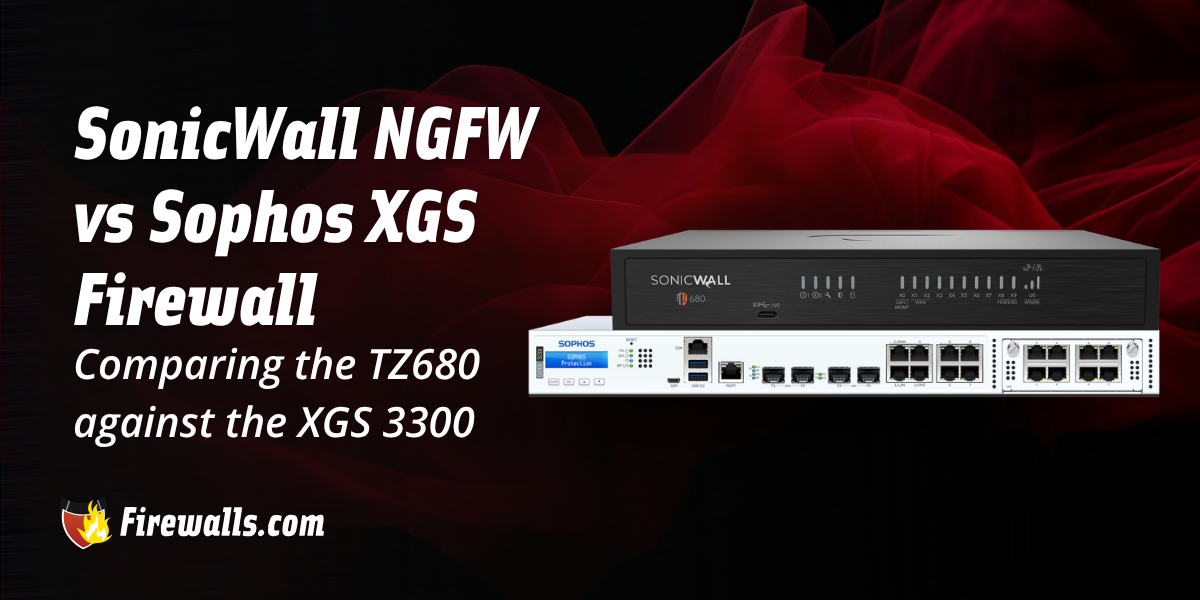
There’s not much argument about the fact that SonicWall NGFW and Sophos XGS firewalls are both stellar options. However, that doesn’t mean they don’t come with some major differences.
With so much technical information in the datasheets, identifying the key differences can be challenging. For this article, I’m breaking into a firewall comparison between the SonicWall TZ680 and Sophos XGS 3300 to help you sort through the details with ease.
Key Takeaways:
- SonicWall TZ680 is optimized for small businesses and branch office deployments
- Sophos XGS 3300 delivers enterprise-class throughput and scalability
- Both firewalls support SD-WAN, TLS 1.3 inspection, and advanced threat protection
- Comparing throughput, VPN performance, and connection limits will simplify your buying decisions
- Match firewall capabilities to your organization’s growth and network requirements
Choosing Business Network Security Providers
Your entire business network strategy is bound to change over time. In the same vein, you’ll need a bit of hindsight on what your network demands might look like several years down the road.
First and foremost, different firewall vendors are going to prioritize different approaches to network security. For example, this is especially evident throughout the data sheets, where the specs can vary a lot between vendors and firewall hardware. Not only is it crucial to consider the spec sheets across firewall models, but the same can be said about the specifics behind each vendor as well.

What is the SonicWall NGFW TZ680?
A part of the new Gen 8 lineup from SonicWall, the TZ680 is made for small businesses that need enterprise-level protection. One of many out of the TZ series, I always like to highlight the years of network support the model brings to the table.
Here’s a quick overview of what the TZ680 is capable of:
- Firewall Throughput: 5 Gbps
- Threat Prevention Throughput: 2.5 Gbps
- App Inspection Throughput: 3 Gbps
- IPS Throughput: 3 Gbps
- Max Connections (SPI): 1,600,000
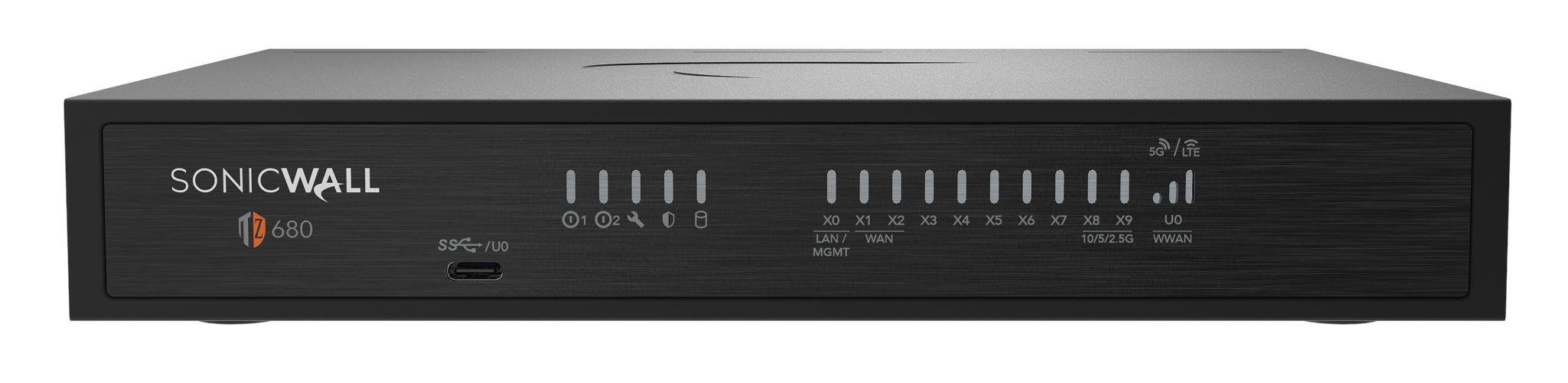
In addition to this, Zero-Touch Deployment, centralized management, and advanced threat prevention simplify ongoing admin work. As impressive as the SonicWall TZ series can be, you have to dig a little deeper with the research. Moreover, Sophos is equally impressive in many ways, but I’m here to focus on how the XGS 3300 specifically differs in comparison.
What is the 3300 Sophos Firewall Appliance?
I never have to dig very far into the specs on the Sophos XGS 3300 to realize it’s a high-performing next-gen firewall. Moreover, it caters to those in the mid-to-large enterprise range with impressive specs and XGS architecture for the layered security you need.
For a quick comparison to the TZ680, check out the brief specs list below:
- Firewall Throughput: 58 Gbps
- Threat Protection Throughput: 10 Gbps
- IPS Throughput: 14 Gbps
- Xstream SSL/TLS Inspection: 3.13 Gbps
- Concurrent Connections: 13,700,000

Specifications aside, it’s the security features I really get excited about. From streaming DPI to AI-driven threat detection, cloud sandbox, DNS protection, and a lot more, the 3300 offers the flexibility you need to scale as the years go by.
Comparing SonicWall NGFW TZ680 vs the XGS 3300
Here’s the thing: both SonicWall and Sophos XGS are stellar options for businesses working to put a strong network security stack together. However, the question always lingers, when you need a firewall for business, which model is actually the right choice?
The answer to this question relies on diving into the details, making comparisons, and auditing your own network demands. For an easy way to support your decision-making, make sure to use the table below as a starting reference point.
| Specifications | SonicWall TZ680 | Sophos XGS 3300 |
|---|---|---|
| Firewall Throughput | 5 Gbps | 58 Gbps |
| Threat Prevention Throughput | 2.5 Gbps | 10 Gbps |
| IPS Throughput | 3 Gbps | 14 Gbps |
| TLS/SSL Inspection Throughput | 800 Mbps | 3.13 Gbps |
| IPsec VPN Throughput | 2.5 Gbps | 31.1 Gbps |
| Max Concurrent Connections | 1,600,000 (SPI) | 13,700,000 |
| New Connections per Second | 26,000 | 257,800 |
| Interfaces | 8 x 1GbE Cu 2 x 10G SFP 1 console (Micro-USB) 1 USB (type-C) | 8 x GE copper 2 x SFP fiber 2 x SFP+ 10 GE fiber 1 x RJ45 MGMT 1 x COM RJ45 1 x Micro-USB 2 x USB 3.0 (front) 1 x USB 2.0 (rear) |
It’s pretty easy to see where these firewalls differ. Nevertheless, both are excellent options; they just serve different target markets. Moreover, both of these firewall manufacturers give you plenty of room to scale through other models in their lineup.

Let’s Wrap Up
Once you spend some time with the fine print on these firewalls, it’s pretty evident that both Sophos and the SonicWall NGFW are strong options. However, it’s important to keep in mind that the TZ680 is great for branch offices and small to mid-sized organizations.
With the XGS 3300, you’re getting a lot more capability here that’s focused on the needs of larger enterprise environments. Overall, the best way you can make sure you end up with the right firewall hardware is by working with our team directly at Firewalls.com. This gives you the hardware selection, industry expertise, and long-term support every business needs.
Frequently Asked Questions
What are the Biggest Differences Between the TZ680 and XGS 3300?
The XGS 3300 comes with higher throughput, connection capacity, and performance for demanding workloads in large enterprise environments.
Which Firewall is Better for Small Business and Branch Office Deployments?
You’ll find that the TZ680 is generally better for small to mid-sized organizations and branch locations. This is heavily due to the compact form factor and simplified deployment and management.
How do the SonicWall TZ680 and Sophos XGS 3300 Compare in Throughput and Connection Capacity?
With the Sophos XGS 3300, you’re getting higher firewall, threat protection, IPS, and VPN throughput. This also comes with a much higher connection capacity, perfect for the needs of those on an enterprise scale.
What Security Features do the TZ680 and XGS 3300 Have in Common?
Both firewalls support next-gen security features like deep packet inspection, TLS 1.3 inspection, SD-WAN, advanced threat prevention, centralized management, and more.
How do I Choose the Right Firewall for my Business Network Security Needs?
You start by thoroughly evaluating your organization’s size, expected traffic volume, number of locations, security requirements and future business growth plans. Matching these needs to the right firewall hardware is how you end up with the best long-term investment.