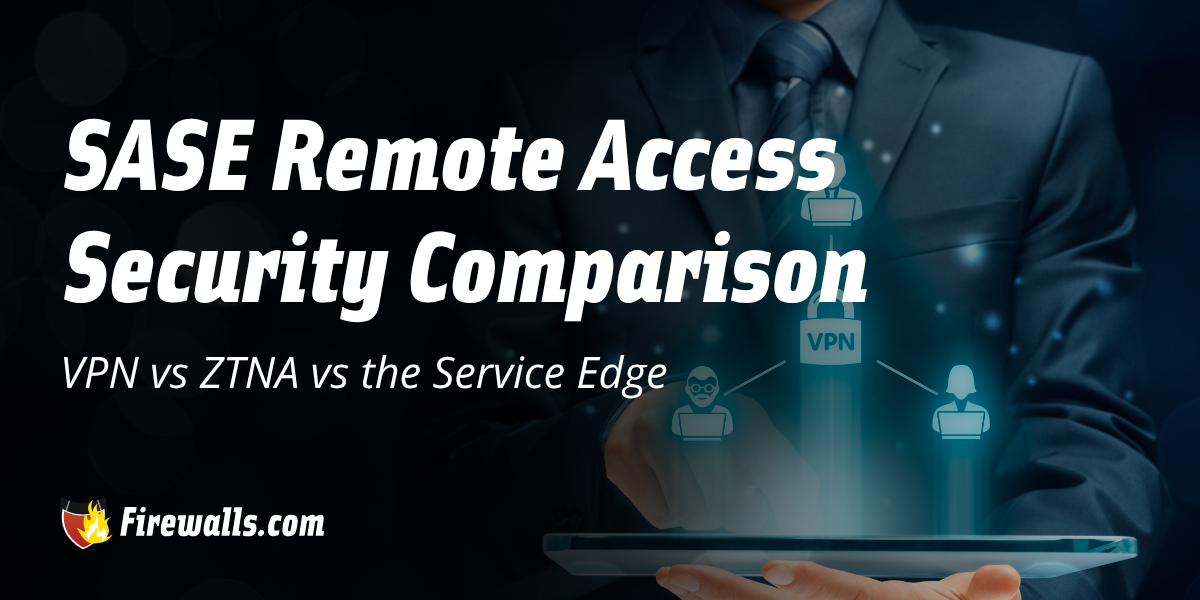
Before I get too deep into the details, it helps to understand that SASE remote access security combines networking and security tech. The aim here is to protect users, apps, and data across the nature of modern business environments.
Standing for Secure Access Service Edge (SASE), you’re getting a combination of cloud-delivered security tools and connectivity here. This article offers a cybersecurity frameworks comparison, highlighting VPN, ZTNA, and Service Edge details.
Key Takeaways:
- SASE combines cloud security and networking for modern remote access needs
- VPNs provide simple encrypted access but offer limited visibility and control
- ZTNA improves security with continuous verification and least-privilege access
- SASE supports scalable protection across users, apps, and distributed networks
- Choosing the right framework depends on security goals, infrastructure, and growth plans
The Evolution of Secured Access Solutions in Modern Business Networks
Today’s business networks have become more distributed than we’ve ever seen throughout history. While this comes with a lot of benefits, there are just as many challenges. This is also true when it comes to securing data, users, and devices.
With the likes of hybrid work, cloud apps, and third-party access, the attack surface for business networks is massive. This is part of what led to more advanced firewall and network security solutions over the years.
Nevertheless, outside of the hardware, it doesn’t hurt to ask the question: What is a security framework? Understanding the differences between VPN, ZTNA, and the Service Edge is how you build scalable and reliable remote access strategies.

What is the VPN Remote Access Strategy?
Through a VPN-supported strategy, you can establish protected tunnels between remote devices and your internal networks. Many organizations tend to lean on VPNs to support their remote workforce.
Here’s a multi-angle look at how this strategy works:
- Access Control: Authenticates users before granting access
- Security Architecture: Uses an encrypted tunnel and perimeter-based security model to protect remote connections
- Deployment & Management: Offers simple deployment with familiar tools, but can be difficult to manage at larger scales
- Scalability & Performance: Can experience performance limitations as remote users and device demands grow
- Visibility & Policy Enforcement: Provides basic connection monitoring but limited app-level access control and visibility
I also like to point out that some of these ins and outs can vary based on the type of VPN tools and services you’re utilizing. The core advantage here is their ability to quickly deliver secure access without requiring major changes to infrastructure.
What is the ZTNA Security Framework?
Zero Trust Network Access (ZTNA) is a security framework that really helps you build a robust cybersecurity strategy. In short, ZTNA provides highly controlled access to apps and resources through continuous verification.
Below are a few comparable details that offer a great reference point:
- Access Control: Verifies users, devices, and policies before granting app-specific access
- Security Architecture: Uses a Zero Trust model that continuously validates access instead of trusting network location
- Deployment & Management: Requires more planning and policy configuration, but access control is centralized
- Scalability & Performance: Supports distributed users and cloud apps with flexible, app-level connections
- Visibility & Policy Enforcement: Provides detailed user, device, and app visibility with granular security policies
Although ZTNA does require a bit more planning than using VPNs, it comes with stronger visibility and granular access management. I always like to highlight that businesses adopting a cloud or hybrid work model heavily benefit from a ZTNA framework.
Another important angle here is that ZTNA is commonly used as a component within a broader security framework. It isn’t about choosing one solution over all of the others but finding the right combination for what your security stack needs.
What is the Secure Access Service Edge?
A well-known cloud-based security framework, Secure Access Service Edge (SASE), moves security away from traditional hardware-based network boundaries. Protecting users, devices, apps, and data, SASE does this regardless of where the connection comes from.
Check out what makes the SASE framework unique:
- Access Control: Combines identity-based access controls with Zero Trust principles
- Security Architecture: Uses a cloud-delivered framework that integrates networking and multiple security services
- Deployment & Management: Centralizes security management through a unified platform but may require broader planning
- Scalability & Performance: Provides flexible cloud-based security that supports distributed users, locations, and apps
- Visibility & Policy Enforcement: Delivers centralized monitoring and consistent security policies across the entire organization
Most organizations utilize SASE for its scalable, cloud-delivered security strategies. However, I would like to note that SASE can end up requiring more strategic planning when it comes to infrastructure changes.
SASE Remote Access Security Comparison vs VPN vs ZTNA
A part of the best security management practices is evaluating all of your options. Considering these frameworks all have something that makes them unique, having those details side by side always helps the decision-making process.
| Category | SASE | VPN | ZTNA |
|---|---|---|---|
| Access Control | Uses identity-based access with Zero Trust controls | Authenticates users before network access | Verifies users, devices, and policies before access |
| Security Architecture | Cloud-based framework combining security and networking | Encrypted tunnels using perimeter-based security | Zero Trust model with continuous verification |
| Deployment & Management | Unified management, but may require more internal planning | Simple deployment but harder to scale | Requires planning with centralized policy control |
| Scalability & Performance | Scales across users, locations, and apps | May face performance limits as demand grows | Supports flexible app-level connections |
| Visibility & Policy Enforcement | Centralized monitoring with consistent policies | Basic monitoring with limited access control | Granular visibility and app-level policies |
| Best For | Companies needing comprehensive cloud security | Businesses needing quick remote network access | Organizations requiring secure, least-privilege access |
It isn’t hard to find security solutions, but it can be challenging to end up with the right choice without working with the experts on the topic. Nevertheless, with this SASE remote access security comparison, it’s all about understanding your own network and operational demands. From there, you can size that up against the ins and outs of robust cybersecurity frameworks, firewall hardware, and the list goes on.

Let’s Wrap Up
In any SASE remote access security comparison, you’ll want to consider infrastructure, user needs, future growth plans and overall security goals. Remember, VPNs offer simple remote access but can struggle with control and visibility. ZTNA makes use of least-privilege access and continuous verification, and SASE is the layered cloud-based approach.
Then again, you won’t have to navigate this alone working with us at Firewalls.com. From security strategy to hardware and long-term management solutions, let’s chat about what your network really needs.
Frequently Asked Questions
What Makes VPN and ZTNA Unique?
VPNs offer secure network access through encrypted tunnels, while ZTNA uses continuous verification to deliver more specific app-level access.
Is SASE Better Than a Traditional VPN?
SASE promises a deeper cloud-based security approach, while VPNs are focused primarily on secure remote connectivity.
Why are Businesses Moving From VPN to the ZTNA Framework?
More organizations are adopting ZTNA due to its stronger access controls, improved visibility, and least-privilege approach.
What is the Core Benefit of a SASE Security Framework?
SASE combines networking and security services to protect users, apps, and data across distributed environments.
Should Businesses Use VPN, ZTNA, or SASE for Remote Access?
The right choices depend on a company’s infrastructure, security demands, real-world user needs and long-term operational goals.