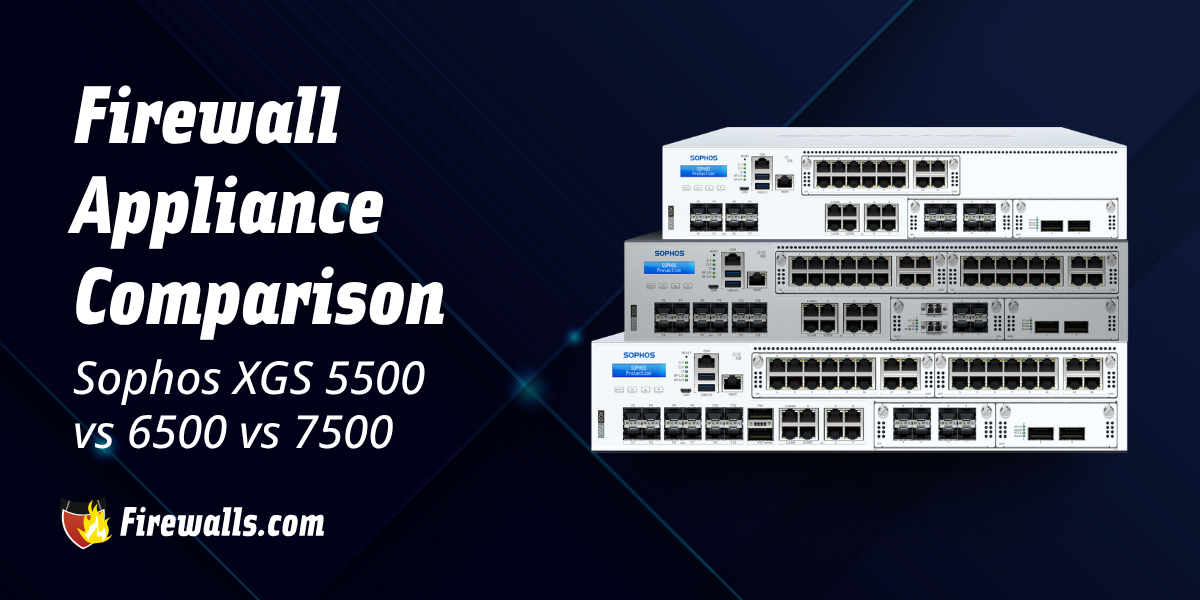
Aside from the differences between the XGS 5500 vs 6500 vs 7500, each firewall appliance is geared toward large, distributed networks. Sure, considering they come from the same manufacturer, you’ll find quite a few similarities as well.
However, if you really want to get aligned with the right Sophos XGS firewall, then you need to know what sets them apart. This article focuses on three models catering to enterprise-scale operations and the needs of a modern network security strategy.
Key Takeaways:
- The Sophos XGS 5500, 6500, and 7500 promise progressively higher performance with a strong focus on scalability
- Firewall, IPS, threat protection, and NGFW throughput increase across all three models
- IPsec VPN throughput ranges from 92.5 Gbps to 117 Gbps between the three firewalls
- Concurrent connection capacity ranges from 32.4 million up to 48 million depending on the model
- Compare throughput, VPN needs, connection capacity, and interfaces against both current and projected network requirements
Firewall Appliance Features From Sophos XGS
These Sophos enterprise firewall solutions come with a pretty stacked list of advanced security and performance features. Xstream architecture is a big part of this conversation, and I’d say it’s one of the biggest differentiators for Sophos.
Security capabilities that tend to overlap in the XGS series include deep packet inspection, IPS, TLS 1.3 inspection, and much more. In addition to that, Sophos easily integrates firewall security with ZTNA, access points, endpoint solutions, and the list goes far beyond this.
The seamlessness in security features is part of what makes Sophos firewalls so scalable. However, ending up with the right piece of hardware requires a firewall comparison that pinpoints where the differences are.
What is the Sophos XGS 5500?
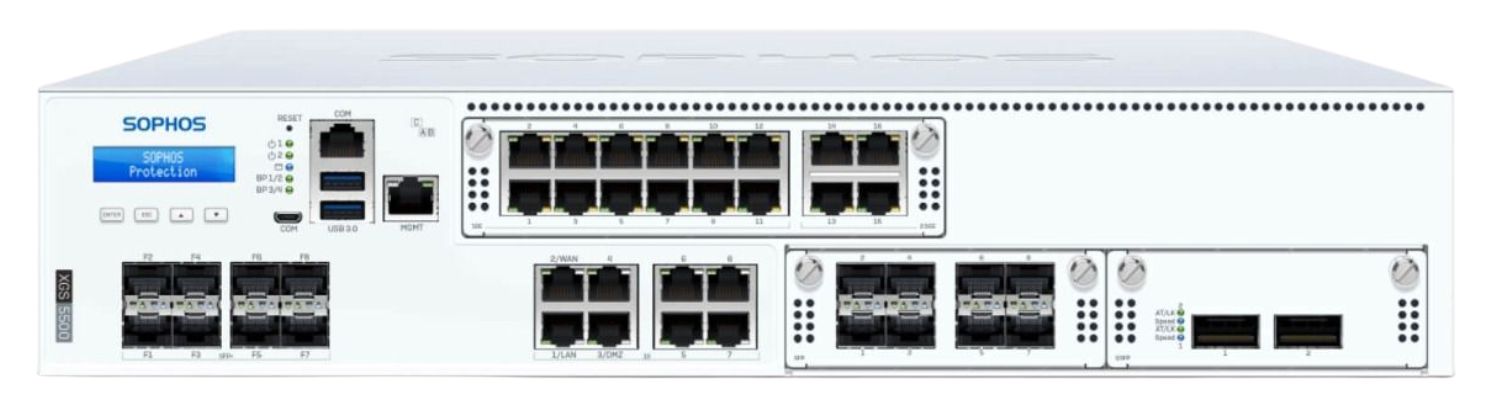
I always say the Sophos XGS 5500 is great for enterprise-level organizations that still need quite a bit of wiggle room to grow into. Great for handling dense, encrypted network traffic, the 5500 is built to handle increasing security demands.
Here’s a quick look at some of the leading specs from this firewall model:
- Firewall Throughput: 100 Gbps
- IPS Throughput: 40 Gbps
- Threat Protection Throughput: 46 Gbps
- IPsec VPN Throughput: 92.5 Gbps
- Concurrent Connections: 32.4 million
Substantial, to say the least, and more than enough for companies that need firewall, VPN, threat protection, and plenty of connection capacity. On the other hand, if the 5500 doesn’t seem like a good fit, the XGS 6500 is just one step away.
What is the Sophos XGS 6500?
Focusing on the Sophos XGS 6500 firewall appliance, I like to highlight its extensive VPN connectivity and overall high-capacity approach. The same Xstream architecture is there, but you’re getting a bit more strength when it comes to several specs.
Below is a quick overview of what that looks like for the XGS 6500:
- Firewall Throughput: 120 Gbps
- IPS Throughput: 50.75 Gbps
- Threat Protection Throughput: 53.5 Gbps
- IPsec VPN Throughput: 109.8 Gbps
- Concurrent Connections: 39.9 million
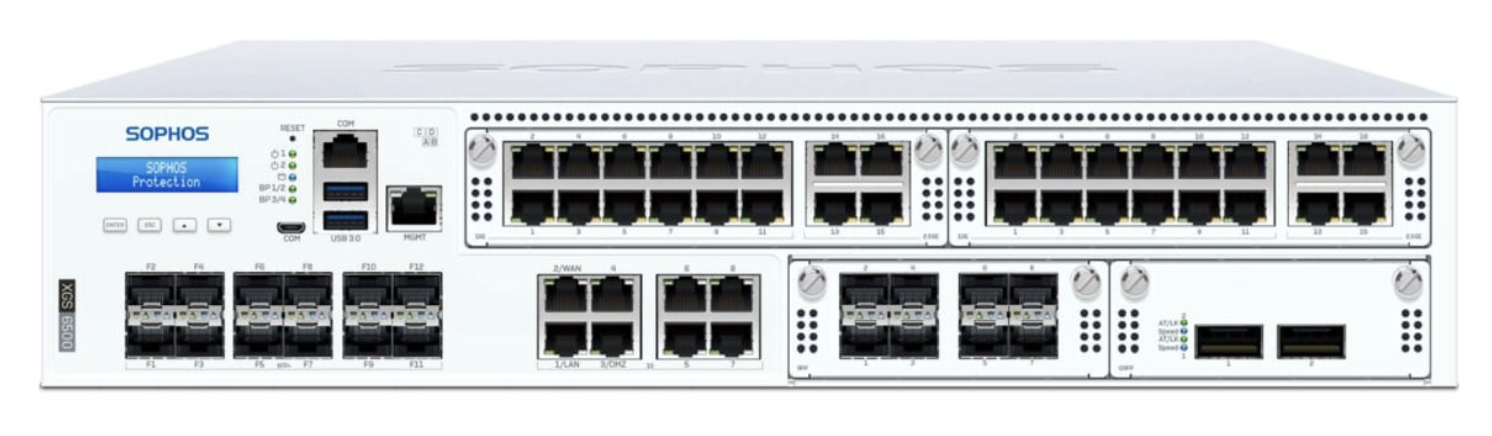
A powerhouse in its own right, the specs are impressive, but I wouldn’t look at that as a universal choice for every large business. It’s a bit more nuanced than that, and for those who are really worried about scalability, the XGS 7500 is always an option.
What is the Sophos XGS 7500?
As you might expect at this point, the Sophos XGS 7500 comes with some of the strongest specifications out of all three of these models. This is generally how scalability works with any next generation firewall comparison.
Check out a few of the comparable specs in the list below:
- Firewall Throughput: 160 Gbps
- IPS Throughput: 71.5 Gbps
- Threat Protection Throughput: 70 Gbps
- IPsec VPN Throughput: 117 Gbps
- Concurrent Connections: 48 million
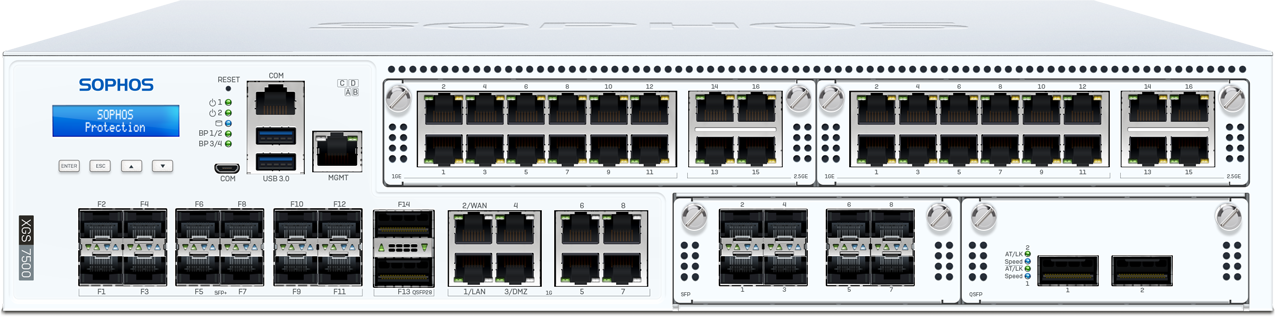
A more than suitable option for enterprise environments, the Sophos XGS 7500 covers more than just the basics. You could go down a rabbit hole with the datasheet, but the bulk of your decision-making will consider a handful of factors.
Comparing the lead specs across all three models will, at the very least, get you started in the right direction. The other half of your decision is having a thorough understanding of the real-world and future demands of your business network.
Firewall Appliance Comparison for Sophos XGS 5500 vs 6500 vs 7500
Understanding this firewall appliance comparison is actually pretty simple. I like to paint the picture like this: Sophos XGS 5500 vs 6500 vs 7500 is a comparison of progressively higher performance. If it isn’t already apparent, I’ve put together a straightforward comparison table between several specs found across each model.
| Specification | Sophos XGS 5500 | Sophos XGS 6500 | Sophos XGS 7500 |
|---|---|---|---|
| Firewall Throughput | 100 Gbps | 120 Gbps | 160 Gbps |
| IPS Throughput | 40 Gbps | 50.75 Gbps | 71.5 Gbps |
| Threat Protection Throughput | 46 Gbps | 53.5 Gbps | 70 Gbps |
| NGFW Throughput | 38 Gbps | 46.5 Gbps | 58 Gbps |
| IPsec VPN Throughput | 92.5 Gbps | 109.8 Gbps | 117 Gbps |
| Xstream SSL/TLS Inspection | 13.5 Gbps | 16 Gbps | 19.5 Gbps |
| Interfaces | 8 × GbE copper 8 × 10GbE SFP+ fiber 1 x RJ45 Mgmt. 1 x COM RJ45 1 x Micro-USB 2 x USB 3.0 | 8 × GbE copper 12 × 10GbE SFP+ fiber 1 x RJ45 Mgmt. 1 x COM RJ45 1 x Micro-USB 2 x USB 3.0 | 8 × GbE copper 12 × 10GbE SFP+ fiber 2 × QSFP28 up to 40 Gbps 1 x RJ45 Mgmt. 1 x COM RJ45 1 x Micro-USB 2 x USB 3.0 |
You can see it isn’t just the throughput that scales with them. From one model to the next, throughput, Xstream capability, and interface details all vary, even if it doesn’t seem like much.’
Nevertheless, differences aside, the XGS 5500, 6500 and 7500 all target the needs of large enterprise networks. A great path to take for any organization facing expanding network requirements, there are multiple reliable Sophos XGS firewall appliances.
The Final Word
When reviewing each firewall appliance, it becomes clear that all three of these XGS models are focused on the needs of enterprise networks. Featuring capabilities that progressively scale with each passing model, it’s an excellent approach for scaling businesses.
To put it simply, the 5500 offers strong balance, the 6500 amps up the performance and connectivity, and the 7500 delivers the highest capacity. You can end up with the right Sophos XGS firewall appliance by removing all of the guesswork by working alongside us at Firewalls.com.
Frequently Asked Questions
Which Sophos XS Model Has the Highest Firewall Throughput?
The XGS 7500 leads the lineup with up to 160 Gbps of firewall throughput, compared to the 12 and 100 Gbps respective throughput of the 6500 and 5500.
How do the XGS 5500, 6500, and 7500 Differ in VPN Performance?
IPsec VPN throughput increases across the models, from 92.5 Gbps on the XGS 5500 to 109.8 Gbps on the 6500 and 117 Gbps on the 7500.
Which Sophos XGS Firewall Supports the Most Concurrent Connections?
You’ll find that the XGS 7500 offers the most support, being able to handle up to 48 million concurrent connections.
Is the Sophos XGS 6500 More Powerful Than the XGS 5500?
Yes, the 6500 from Sophos offers higher firewall, IPS, threat prevention, NGFW, VPN, and SSL/TLS inspection throughput compared to the 5500.
How Should Businesses Choose Between the XGS 5500, 6500, and 7500?
Your organization should compare the current and projected traffic volumes of your network to the capabilities of each individual model.